Matemático
Zu Chongzhi
429 - 500
PT.WIKIPEDIA PAGE VIEWS (PV)

 Zu Chongzhi
Tsu Ch'ung Chih (祖冲之) (429 — 500) foi um matemático e astrónomo chinês. Por volta do ano 480, propôs um valor singularmente preciso de pi para a época: Milü = 355/113 = algo intermediário entre 3,1415926 e 3,1415927. Leia mais na Wikipédia
Sua biografia está disponível em 35 idiomas na Wikipédia. Zu Chongzhi é o 140º matemático mais popular (caiu do 123º em 2024), a 205ª biografia mais popular da China (subiu do 226ª em 2019) e o 3º matemático mais popular da China.
Memorability Metrics
Page views of Zu Chongzhi by language
Among Matemáticos
Among matemáticos, Zu Chongzhi ranks 140 out of 1,004. Before him are Andrew Wiles, Meton of Athens, Liu Hui, Hermann Weyl, Hermann of Reichenau, and Annie S. D. Maunder. After him are Henri Lebesgue, Ferdinand von Lindemann, Mikhail Ostrogradsky, John G. Kemeny, Gabriel Lamé, and George Pólya.
Most Popular Matemáticos in Wikipedia
Go to all Rankings

Andrew Wiles
1953 - Present
HPI: 69.99
Rank: 134

Meton of Athens
500 BC - 460 BC
HPI: 69.92
Rank: 135
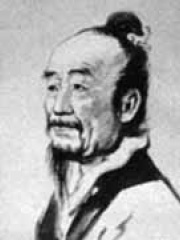
Liu Hui
225 - 295
HPI: 69.90
Rank: 136
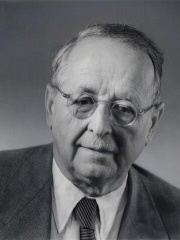
Hermann Weyl
1885 - 1955
HPI: 69.71
Rank: 137
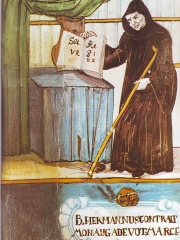
Hermann of Reichenau
1013 - 1054
HPI: 69.62
Rank: 138
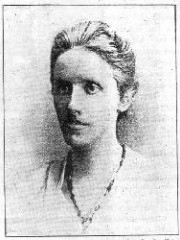
Annie S. D. Maunder
1868 - 1947
HPI: 69.62
Rank: 139
Zu Chongzhi
429 - 500
HPI: 69.57
Rank: 140
Henri Lebesgue
1875 - 1941
HPI: 69.44
Rank: 141
Ferdinand von Lindemann
1852 - 1939
HPI: 69.36
Rank: 142
Mikhail Ostrogradsky
1801 - 1862
HPI: 69.33
Rank: 143
John G. Kemeny
1926 - 1992
HPI: 69.16
Rank: 144
Gabriel Lamé
1795 - 1870
HPI: 69.11
Rank: 145
George Pólya
1887 - 1985
HPI: 69.06
Rank: 146

Contemporaries
Among people born in 429, Zu Chongzhi ranks 1. Among people deceased in 500, Zu Chongzhi ranks 3. Before him are Buddhaghosa, and Nonnus. After him are Vātsyāyana, Chandragupta II, Hierocles of Alexandria, Hesychius of Alexandria, Rutilius Claudius Namatianus, Aedesia, Anthemius, Charaton, and Asclepigenia.
Others Born in 429
Go to all RankingsOthers Deceased in 500
Go to all Rankings
Buddhaghosa
PHILOSOPHER
401 - 500
HPI: 76.08
Rank: 1

Nonnus
WRITER
500 - 500
HPI: 69.60
Rank: 2
Zu Chongzhi
MATHEMATICIAN
429 - 500
HPI: 69.57
Rank: 3

Vātsyāyana
WRITER
300 - 500
HPI: 68.99
Rank: 4
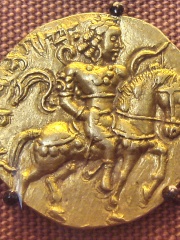
Chandragupta II
POLITICIAN
400 - 500
HPI: 66.56
Rank: 5

Hierocles of Alexandria
WRITER
410 - 500
HPI: 65.58
Rank: 6

Hesychius of Alexandria
LINGUIST
500 - 500
HPI: 63.97
Rank: 7

Rutilius Claudius Namatianus
POLITICIAN
420 - 500
HPI: 63.37
Rank: 8

Aedesia
PHILOSOPHER
500 - 500
HPI: 63.06
Rank: 9
Anthemius
POLITICIAN
400 - 500
HPI: 62.98
Rank: 10

Charaton
POLITICIAN
400 - 500
HPI: 62.96
Rank: 11

Asclepigenia
PHILOSOPHER
400 - 500
HPI: 62.40
Rank: 12
In China
Among people born in China, Zu Chongzhi ranks 205 out of NaN. Before him are King Zhou of Shang (-1105), Li Keqiang (1955), Zhang Liao (169), Tao Yuanming (365), Wang Wei (699), and Yesün Temür (1293). After him are Xiahou Dun (155), Wang Zhaojun (-50), Chien-Shiung Wu (1912), Emperor Wen of Han (-202), Empress Xiaoyichun (1727), and Jiang Wei (202).
Others born in China
Go to all Rankings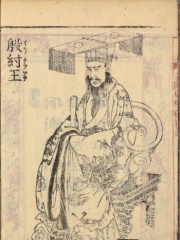
King Zhou of Shang
POLITICIAN
1105 BC - 1046 BC
HPI: 69.69
Rank: 199
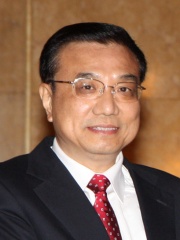
Li Keqiang
POLITICIAN
1955 - 2023
HPI: 69.69
Rank: 200
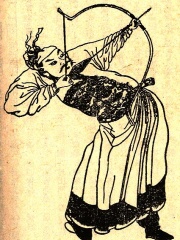
Zhang Liao
MILITARY PERSONNEL
169 - 222
HPI: 69.67
Rank: 201
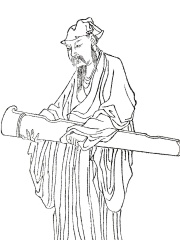
Tao Yuanming
WRITER
365 - 427
HPI: 69.63
Rank: 202
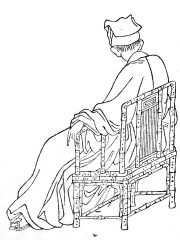
Wang Wei
WRITER
699 - 759
HPI: 69.61
Rank: 203
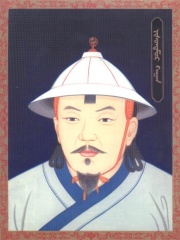
Yesün Temür
POLITICIAN
1293 - 1328
HPI: 69.58
Rank: 204
Zu Chongzhi
MATHEMATICIAN
429 - 500
HPI: 69.57
Rank: 205
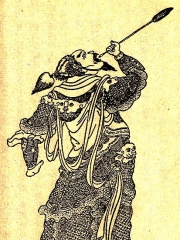
Xiahou Dun
MILITARY PERSONNEL
155 - 220
HPI: 69.55
Rank: 206
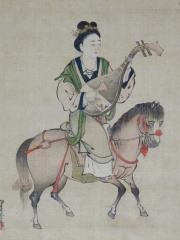
Wang Zhaojun
POLITICIAN
50 BC - 100 BC
HPI: 69.53
Rank: 207
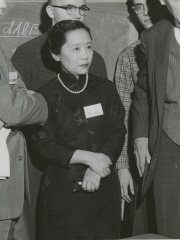
Chien-Shiung Wu
PHYSICIST
1912 - 1997
HPI: 69.53
Rank: 208

Emperor Wen of Han
POLITICIAN
202 BC - 157 BC
HPI: 69.50
Rank: 209

Empress Xiaoyichun
POLITICIAN
1727 - 1775
HPI: 69.49
Rank: 210
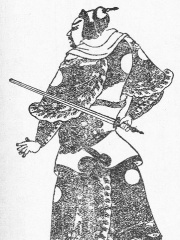
Jiang Wei
MILITARY PERSONNEL
202 - 264
HPI: 69.49
Rank: 211
Among Matemáticos In China
Among matemáticos born in China, Zu Chongzhi ranks 3. Before him are Zhang Heng (78), and Liu Hui (225). After him are Wang Chong (27), Xu Guangqi (1562), Shing-Tung Yau (1949), Guo Shoujing (1231), Yi Xing (683), Liu Xin (-50), Shiing-Shen Chern (1911), Zhu Shijie (1249), and Qin Jiushao (1201).
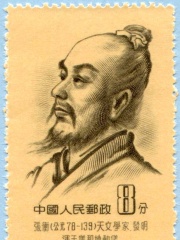
Zhang Heng
78 - 139
HPI: 73.62
Rank: 1
Liu Hui
225 - 295
HPI: 69.90
Rank: 2
Zu Chongzhi
429 - 500
HPI: 69.57
Rank: 3

Wang Chong
27 - 97
HPI: 68.45
Rank: 4
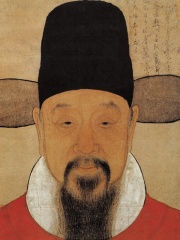
Xu Guangqi
1562 - 1633
HPI: 66.30
Rank: 5
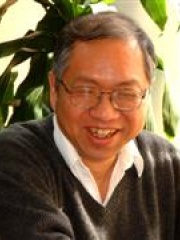
Shing-Tung Yau
1949 - Present
HPI: 64.73
Rank: 6
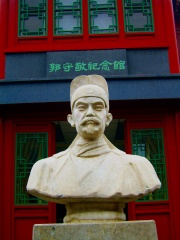
Guo Shoujing
1231 - 1316
HPI: 64.09
Rank: 7
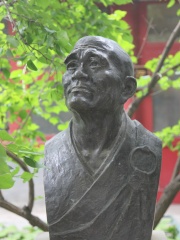
Yi Xing
683 - 727
HPI: 63.66
Rank: 8

Liu Xin
50 BC - 23
HPI: 63.40
Rank: 9
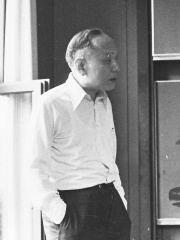
Shiing-Shen Chern
1911 - 2004
HPI: 63.11
Rank: 10
Zhu Shijie
1249 - 1314
HPI: 63.07
Rank: 11
Qin Jiushao
1201 - 1261
HPI: 62.34
Rank: 12