政治家
Liuva I
550 - 573
JA.WIKIPEDIA PAGE VIEWS (PV)
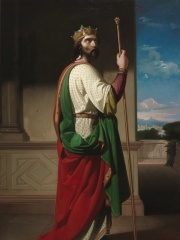
 Liuva I
リウヴァ1世 (Liuva I、生年不詳 - 572年)は、西ゴート王(在位:568年 - 572年)。 ウィキペディアで詳細を読む
彼の伝記はウィキペディアで31言語で利用可能です。Liuva Iは、最も人気のある政治家の中で第5603位(2024年の第5155位から順位を下げ)、スペイン人物の伝記の中で第469位(2019年の第466位から順位を下げ)、また最も人気のあるスペイン人政治家の中で第166位に位置しています。
Memorability Metrics
Page views of Liuva I by language
Among 政治家
Among 政治家, Liuva I ranks 5,603 out of 19,576. Before him are Jehan Sadat, Antipope Eulalius, Zhong Hui, Duncan II of Scotland, Graça Machel, and William I, Elector of Hesse. After him are Georg II, Duke of Saxe-Meiningen, Bess Truman, Khertek Anchimaa-Toka, Prince Felix of Schwarzenberg, Norodom Ranariddh, and Princess Sophie Antoinette of Brunswick-Wolfenbüttel.
Most Popular 政治家 in Wikipedia
Go to all Rankings
Jehan Sadat
1933 - 2021
HPI: 65.79
Rank: 5,599

Antipope Eulalius
310 - 423
HPI: 65.79
Rank: 5,600
Zhong Hui
225 - 264
HPI: 65.78
Rank: 5,601
Duncan II of Scotland
1060 - 1094
HPI: 65.78
Rank: 5,602

Graça Machel
1945 - Present
HPI: 65.78
Rank: 5,603
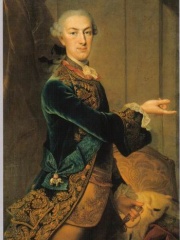
William I, Elector of Hesse
1743 - 1821
HPI: 65.78
Rank: 5,604
Liuva I
550 - 573
HPI: 65.78
Rank: 5,605
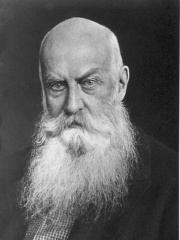
Georg II, Duke of Saxe-Meiningen
1826 - 1914
HPI: 65.78
Rank: 5,606
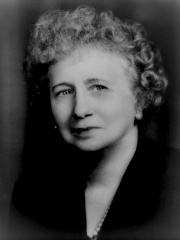
Bess Truman
1885 - 1982
HPI: 65.77
Rank: 5,607
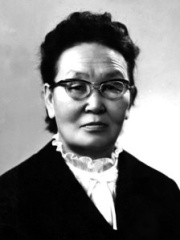
Khertek Anchimaa-Toka
1912 - 2008
HPI: 65.77
Rank: 5,608
Prince Felix of Schwarzenberg
1800 - 1852
HPI: 65.77
Rank: 5,609
Norodom Ranariddh
1944 - 2021
HPI: 65.77
Rank: 5,610
Princess Sophie Antoinette of Brunswick-Wolfenbüttel
1724 - 1802
HPI: 65.77
Rank: 5,611

Contemporaries
Among people born in 550, Liuva I ranks 10. Before him are Teia, Armah, Anastasius of Persia, John the Merciful, Abdullah ibn Salam, and Saint Gall. After him are Cleph, Menander Protector, Arioald, Garibald I of Bavaria, Tardu, and Yeongyang of Goguryeo. Among people deceased in 573, Liuva I ranks 1.
Others Born in 550
Go to all Rankings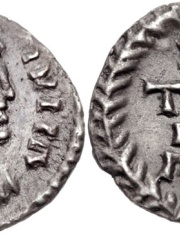
Teia
POLITICIAN
550 - 552
HPI: 70.16
Rank: 4
Armah
POLITICIAN
550 - 630
HPI: 68.97
Rank: 5
Anastasius of Persia
RELIGIOUS FIGURE
550 - 628
HPI: 67.53
Rank: 6
John the Merciful
RELIGIOUS FIGURE
550 - 619
HPI: 66.86
Rank: 7

Abdullah ibn Salam
RELIGIOUS FIGURE
550 - 643
HPI: 66.65
Rank: 8
Saint Gall
WRITER
550 - 645
HPI: 66.51
Rank: 9
Liuva I
POLITICIAN
550 - 573
HPI: 65.78
Rank: 10

Cleph
POLITICIAN
550 - 574
HPI: 64.41
Rank: 11

Menander Protector
WRITER
550 - Present
HPI: 64.09
Rank: 12

Arioald
POLITICIAN
550 - 636
HPI: 64.03
Rank: 13
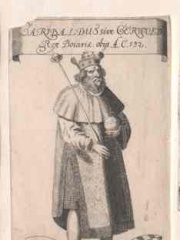
Garibald I of Bavaria
POLITICIAN
550 - 593
HPI: 63.89
Rank: 14

Tardu
POLITICIAN
550 - 603
HPI: 63.52
Rank: 15
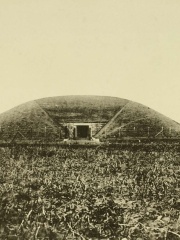
Yeongyang of Goguryeo
POLITICIAN
550 - 618
HPI: 63.34
Rank: 16
Others Deceased in 573
Go to all RankingsIn スペイン
Among people born in スペイン, Liuva I ranks 469 out of NaN. Before him are Pío Baroja (1872), Anthony Mary Claret (1807), Maria of Aragon, Queen of Castile (1403), Unai Emery (1971), Gonzalo Jiménez de Quesada (1509), and Antonio Tejero (1932). After him are Narciso Yepes (1927), Santillana (1952), María de las Mercedes, Princess of Asturias (1880), Ulpia Marciana (48), Alonso Pérez de Guzmán y Sotomayor, 7th Duke of Medina Sidonia (1550), and Dulce of Aragon (1160).
Others born in スペイン
Go to all Rankings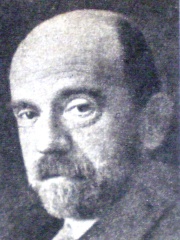
Pío Baroja
WRITER
1872 - 1956
HPI: 65.89
Rank: 463
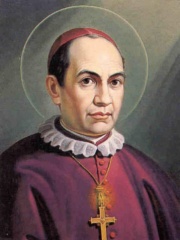
Anthony Mary Claret
RELIGIOUS FIGURE
1807 - 1870
HPI: 65.84
Rank: 464
Maria of Aragon, Queen of Castile
COMPANION
1403 - 1445
HPI: 65.81
Rank: 465

Unai Emery
COACH
1971 - Present
HPI: 65.81
Rank: 466
Gonzalo Jiménez de Quesada
EXPLORER
1509 - 1579
HPI: 65.79
Rank: 467
Antonio Tejero
MILITARY PERSONNEL
1932 - Present
HPI: 65.79
Rank: 468
Liuva I
POLITICIAN
550 - 573
HPI: 65.78
Rank: 469
Narciso Yepes
MUSICIAN
1927 - 1997
HPI: 65.77
Rank: 470

Santillana
SOCCER PLAYER
1952 - Present
HPI: 65.77
Rank: 471
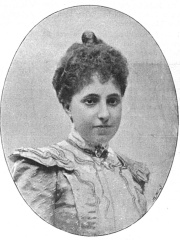
María de las Mercedes, Princess of Asturias
POLITICIAN
1880 - 1904
HPI: 65.73
Rank: 472
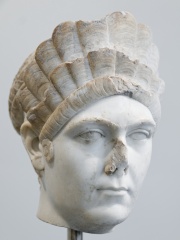
Ulpia Marciana
POLITICIAN
48 - 112
HPI: 65.72
Rank: 473
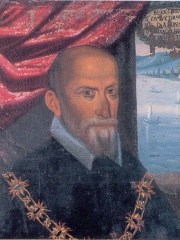
Alonso Pérez de Guzmán y Sotomayor, 7th Duke of Medina Sidonia
MILITARY PERSONNEL
1550 - 1615
HPI: 65.70
Rank: 474
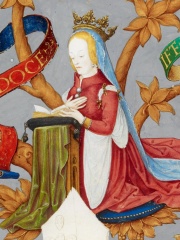
Dulce of Aragon
COMPANION
1160 - 1198
HPI: 65.70
Rank: 475
Among 政治家 In スペイン
Among 政治家 born in スペイン, Liuva I ranks 166. Before him are Egica (610), Anne Hidalgo (1959), Alfonso IV of León (890), Infanta Cristina of Spain (1965), Hydatius (395), and Suintila (594). After him are María de las Mercedes, Princess of Asturias (1880), Ulpia Marciana (48), Philip Prospero, Prince of Asturias (1657), Eleanor of Alburquerque (1374), Al-Mundhir of Córdoba (842), and Erwig (642).
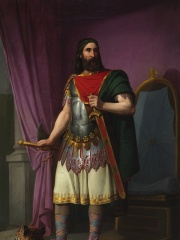
Egica
610 - 702
HPI: 66.14
Rank: 160

Anne Hidalgo
1959 - Present
HPI: 66.14
Rank: 161
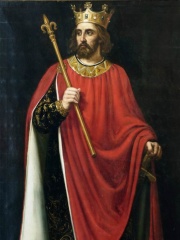
Alfonso IV of León
890 - 933
HPI: 66.05
Rank: 162
Infanta Cristina of Spain
1965 - Present
HPI: 65.96
Rank: 163

Hydatius
395 - 469
HPI: 65.94
Rank: 164
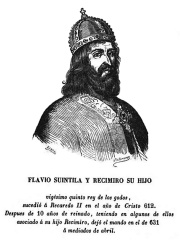
Suintila
594 - 634
HPI: 65.93
Rank: 165
Liuva I
550 - 573
HPI: 65.78
Rank: 166
María de las Mercedes, Princess of Asturias
1880 - 1904
HPI: 65.73
Rank: 167
Ulpia Marciana
48 - 112
HPI: 65.72
Rank: 168
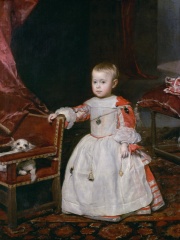
Philip Prospero, Prince of Asturias
1657 - 1661
HPI: 65.62
Rank: 169
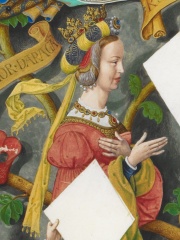
Eleanor of Alburquerque
1374 - 1435
HPI: 65.61
Rank: 170

Al-Mundhir of Córdoba
842 - 888
HPI: 65.54
Rank: 171
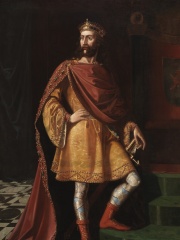
Erwig
642 - 687
HPI: 65.54
Rank: 172