歌手
Lia
2000 - 現在


 Lia
Lia
Lia(リア)は、日本の女性歌手。東京都出身、香港在住。 アメリカのバークリー音楽大学で声楽を学んだのち、アメリカ在住中にゲーム、TV&劇場版アニメ『AIR』の主題歌「鳥の詩」のボーカリストとして歌手デビュー。その後も『CLANNAD 〜AFTER STORY〜』『Angel Beats!』『FORTUNE ARTERIAL 赤い約束』『Charlotte』『planetarian 〜星の人〜』など人気作品の主題歌を担当。 ウィキペディアで詳細を読む
Her biography is available in 16 different languages on Wikipedia. Lia is the 4,286th most popular 歌手, the 1,272nd most popular biography from South Korea and the 207th most popular South Korean 歌手.
Lia is most famous as a member of the South Korean girl group ITZY, where she serves as the lead vocalist. She gained recognition for her powerful singing abilities and contributions to the group's success since their debut in 2019.
Memorability Metrics
Page views of Lia by language
Among 歌手
Among 歌手, Lia ranks 4,286 out of 4,381. Before her are Connie Talbot, Bassekou Kouyate, Adelén, Kodak Black, Skee-Lo, and Mark McGrath. After her are Sturgill Simpson, Sara Evans, Kim Jae-hwan, Roman Lob, Sisqó, and Dev.
Most Popular 歌手 in Wikipedia
Go to all Rankings

Connie Talbot
2000 - Present
HPI: 38.90
Rank: 4,280

Bassekou Kouyate
1966 - Present
HPI: 38.90
Rank: 4,281

Adelén
1996 - Present
HPI: 38.89
Rank: 4,282

Kodak Black
1997 - Present
HPI: 38.89
Rank: 4,283

Skee-Lo
1968 - Present
HPI: 38.88
Rank: 4,284

Mark McGrath
1968 - Present
HPI: 38.88
Rank: 4,285
Lia
2000 - Present
HPI: 38.87
Rank: 4,286

Sturgill Simpson
1978 - Present
HPI: 38.87
Rank: 4,287

Sara Evans
1971 - Present
HPI: 38.86
Rank: 4,288

Kim Jae-hwan
1996 - Present
HPI: 38.85
Rank: 4,289

Roman Lob
1990 - Present
HPI: 38.85
Rank: 4,290

Sisqó
1978 - Present
HPI: 38.84
Rank: 4,291

Dev
1989 - Present
HPI: 38.84
Rank: 4,292

Contemporaries
Among people born in 2000, Lia ranks 278. Before her are Hamed Traorè, Jannine Weigel, Xiyeon, Romano Schmid, Connie Talbot, and John Yeboah. After her are Ashley Moloney, Angelina Melnikova, Jérémie Makiese, Tommaso Giacomel, David Jurásek, and Jean Onana.
Others Born in 2000
Go to all Rankings
Hamed Traorè
SOCCER PLAYER
2000 - Present
HPI: 38.98
Rank: 272

Jannine Weigel
ACTOR
2000 - Present
HPI: 38.94
Rank: 273
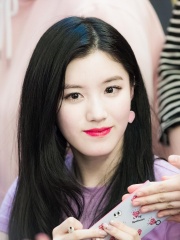
Xiyeon
ACTOR
2000 - Present
HPI: 38.93
Rank: 274

Romano Schmid
SOCCER PLAYER
2000 - Present
HPI: 38.92
Rank: 275
Connie Talbot
SINGER
2000 - Present
HPI: 38.90
Rank: 276

John Yeboah
SOCCER PLAYER
2000 - Present
HPI: 38.89
Rank: 277
Lia
SINGER
2000 - Present
HPI: 38.87
Rank: 278

Ashley Moloney
ATHLETE
2000 - Present
HPI: 38.79
Rank: 279
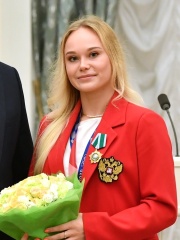
Angelina Melnikova
GYMNAST
2000 - Present
HPI: 38.79
Rank: 280

Jérémie Makiese
SINGER
2000 - Present
HPI: 38.78
Rank: 281

Tommaso Giacomel
ATHLETE
2000 - Present
HPI: 38.74
Rank: 282

David Jurásek
SOCCER PLAYER
2000 - Present
HPI: 38.68
Rank: 283

Jean Onana
SOCCER PLAYER
2000 - Present
HPI: 38.67
Rank: 284
In South Korea
Among people born in South Korea, Lia ranks 1,272 out of 1,128. Before her are Kim Do-kyun (1977), Ryu Ji-hye (1976), Hwang Seok-ho (1989), Xiyeon (2000), Cho Young-cheol (1989), and Kim Hyun-sung (1989). After her are Kim Moon-hwan (1995), Kim Jae-hwan (1996), Dawn (1994), Choi Yoo-jung (1999), Choi Hyeon-ju (1984), and Joo Hyun-jung (1982).
Others born in South Korea
Go to all Rankings
Kim Do-kyun
SOCCER PLAYER
1977 - Present
HPI: 38.94
Rank: 1,266

Ryu Ji-hye
TABLE TENNIS PLAYER
1976 - Present
HPI: 38.93
Rank: 1,267

Hwang Seok-ho
SOCCER PLAYER
1989 - Present
HPI: 38.93
Rank: 1,268
Xiyeon
ACTOR
2000 - Present
HPI: 38.93
Rank: 1,269

Cho Young-cheol
SOCCER PLAYER
1989 - Present
HPI: 38.92
Rank: 1,270

Kim Hyun-sung
SOCCER PLAYER
1989 - Present
HPI: 38.90
Rank: 1,271
Lia
SINGER
2000 - Present
HPI: 38.87
Rank: 1,272

Kim Moon-hwan
SOCCER PLAYER
1995 - Present
HPI: 38.87
Rank: 1,273
Kim Jae-hwan
SINGER
1996 - Present
HPI: 38.85
Rank: 1,274

Dawn
SINGER
1994 - Present
HPI: 38.83
Rank: 1,275

Choi Yoo-jung
SINGER
1999 - Present
HPI: 38.80
Rank: 1,276
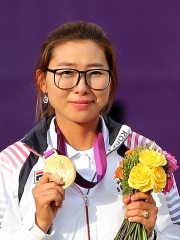
Choi Hyeon-ju
ATHLETE
1984 - Present
HPI: 38.80
Rank: 1,277

Joo Hyun-jung
ATHLETE
1982 - Present
HPI: 38.77
Rank: 1,278
Among 歌手 In South Korea
Among 歌手 born in South Korea, Lia ranks 207. Before her are Bang Ye-dam (2002), Juniel (1993), Bae Jin-young (2000), Simon Dominic (1984), Lee Dae-hwi (2001), and Leo (1990). After her are Kim Jae-hwan (1996), Dawn (1994), Choi Yoo-jung (1999), Park Jeong-hwa (1995), Elly (1991), and Kei (1995).

Bang Ye-dam
2002 - Present
HPI: 39.46
Rank: 201

Juniel
1993 - Present
HPI: 39.37
Rank: 202

Bae Jin-young
2000 - Present
HPI: 39.15
Rank: 203

Simon Dominic
1984 - Present
HPI: 39.12
Rank: 204

Lee Dae-hwi
2001 - Present
HPI: 39.11
Rank: 205

Leo
1990 - Present
HPI: 39.09
Rank: 206
Lia
2000 - Present
HPI: 38.87
Rank: 207
Kim Jae-hwan
1996 - Present
HPI: 38.85
Rank: 208
Dawn
1994 - Present
HPI: 38.83
Rank: 209
Choi Yoo-jung
1999 - Present
HPI: 38.80
Rank: 210

Park Jeong-hwa
1995 - Present
HPI: 38.77
Rank: 211

Elly
1991 - Present
HPI: 38.70
Rank: 212

Kei
1995 - Present
HPI: 38.12
Rank: 213