サッカー選手
Akor Adams
2000 - 現在
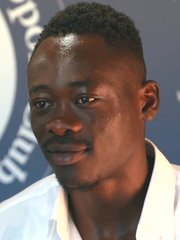
 Akor Adams
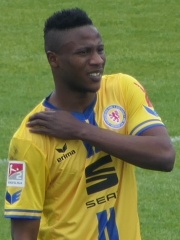
アコル・ジェローム・アダムス(Akor Jerome Adams, 2000年1月29日 - )は、ナイジェリアのベヌエ州出身のプロサッカー選手。セビージャFC所属。ポジションはフォワード。 ウィキペディアで詳細を読む
His biography is available in 15 different languages on Wikipedia. Akor Adams is the 18,946th most popular サッカー選手, the 290th most popular biography from Nigeria and the 145th most popular Nigerian サッカー選手.
Akor Adams is most famous for being a Nigerian footballer who plays as a forward. He has gained recognition for his performances in various leagues and competitions, showcasing his skills and potential on the field.
Memorability Metrics
Page views of Akor Adams by language
Among サッカー選手
Among サッカー選手, Akor Adams ranks 18,946 out of 21,273. Before him are Minoru Suganuma, Lincoln, Rebin Sulaka, Marcel Büchel, Adrien Tameze, and Ákos Buzsáky. After him are Yuto Misao, Takuya Takei, Álex López, Saido Berahino, Mohamed Abdelmonem, and Jorge Ortiz.
Most Popular サッカー選手 in Wikipedia
Go to all Rankings

Minoru Suganuma
1985 - Present
HPI: 35.65
Rank: 18,960

Lincoln
2000 - Present
HPI: 35.65
Rank: 18,961

Rebin Sulaka
1992 - Present
HPI: 35.65
Rank: 18,962
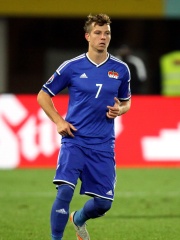
Marcel Büchel
1991 - Present
HPI: 35.65
Rank: 18,963

Adrien Tameze
1994 - Present
HPI: 35.65
Rank: 18,964

Ákos Buzsáky
1982 - Present
HPI: 35.64
Rank: 18,965
Akor Adams
2000 - Present
HPI: 35.64
Rank: 18,966

Yuto Misao
1991 - Present
HPI: 35.64
Rank: 18,967
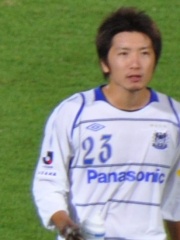
Takuya Takei
1986 - Present
HPI: 35.64
Rank: 18,968

Álex López
1988 - Present
HPI: 35.64
Rank: 18,969
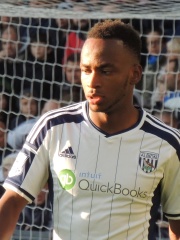
Saido Berahino
1993 - Present
HPI: 35.64
Rank: 18,970
Mohamed Abdelmonem
1999 - Present
HPI: 35.64
Rank: 18,971

Jorge Ortiz
1984 - Present
HPI: 35.64
Rank: 18,972

Contemporaries
Among people born in 2000, Akor Adams ranks 398. Before him are Yan Bingtao, Laia Codina, Colton Herta, Laura Fazliu, Lincoln, and Beabadoobee. After him are Hana Takahashi, Coby White, Oleksandr Syrota, Dominik Kotarski, Manu Sánchez, and Lea Friedrich.
Others Born in 2000
Go to all Rankings
Yan Bingtao
SNOOKER
2000 - Present
HPI: 35.73
Rank: 392
Laia Codina
SOCCER PLAYER
2000 - Present
HPI: 35.73
Rank: 393

Colton Herta
RACING DRIVER
2000 - Present
HPI: 35.70
Rank: 394

Laura Fazliu
WRESTLER
2000 - Present
HPI: 35.66
Rank: 395
Lincoln
SOCCER PLAYER
2000 - Present
HPI: 35.65
Rank: 396
Beabadoobee
MUSICIAN
2000 - Present
HPI: 35.65
Rank: 397
Akor Adams
SOCCER PLAYER
2000 - Present
HPI: 35.64
Rank: 398
Hana Takahashi
SOCCER PLAYER
2000 - Present
HPI: 35.62
Rank: 399

Coby White
BASKETBALL PLAYER
2000 - Present
HPI: 35.54
Rank: 400
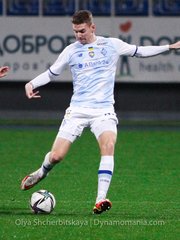
Oleksandr Syrota
SOCCER PLAYER
2000 - Present
HPI: 35.50
Rank: 401

Dominik Kotarski
SOCCER PLAYER
2000 - Present
HPI: 35.44
Rank: 402

Manu Sánchez
SOCCER PLAYER
2000 - Present
HPI: 35.42
Rank: 403
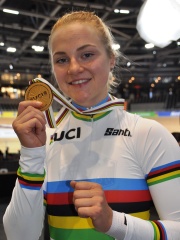
Lea Friedrich
CYCLIST
2000 - Present
HPI: 35.39
Rank: 404
In Nigeria
Among people born in Nigeria, Akor Adams ranks 290 out of 309. Before him are Abdulla Baba Fatadi (1985), Aminu Umar (1995), Ikechukwu Ezenwa (1988), Dayo Amusa (1983), Azubuike Egwuekwe (1989), and Ramsey Nouah (1970). After him are Ese Brume (1996), James Godday (1984), Daniel Akpeyi (1986), Onome Ebi (1983), Mobi Oparaku (1976), and Emmanuel Ekpo (1987).
Others born in Nigeria
Go to all Rankings
Abdulla Baba Fatadi
SOCCER PLAYER
1985 - Present
HPI: 35.80
Rank: 284
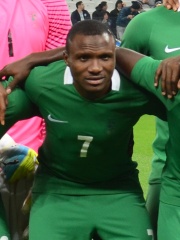
Aminu Umar
SOCCER PLAYER
1995 - Present
HPI: 35.78
Rank: 285

Ikechukwu Ezenwa
SOCCER PLAYER
1988 - Present
HPI: 35.73
Rank: 286

Dayo Amusa
ACTOR
1983 - Present
HPI: 35.72
Rank: 287

Azubuike Egwuekwe
SOCCER PLAYER
1989 - Present
HPI: 35.69
Rank: 288

Ramsey Nouah
ACTOR
1970 - Present
HPI: 35.69
Rank: 289
Akor Adams
SOCCER PLAYER
2000 - Present
HPI: 35.64
Rank: 290

Ese Brume
ATHLETE
1996 - Present
HPI: 35.58
Rank: 291

James Godday
ATHLETE
1984 - Present
HPI: 35.56
Rank: 292
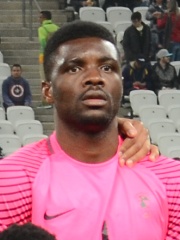
Daniel Akpeyi
SOCCER PLAYER
1986 - Present
HPI: 35.53
Rank: 293

Onome Ebi
SOCCER PLAYER
1983 - Present
HPI: 35.49
Rank: 294
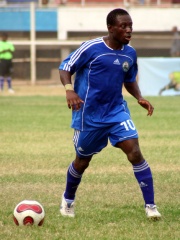
Mobi Oparaku
SOCCER PLAYER
1976 - Present
HPI: 35.48
Rank: 295
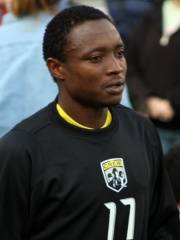
Emmanuel Ekpo
SOCCER PLAYER
1987 - Present
HPI: 35.45
Rank: 296
Among サッカー選手 In Nigeria
Among サッカー選手 born in Nigeria, Akor Adams ranks 145. Before him are Mikel Agu (1993), Imoh Ezekiel (1993), Abdulla Baba Fatadi (1985), Aminu Umar (1995), Ikechukwu Ezenwa (1988), and Azubuike Egwuekwe (1989). After him are Daniel Akpeyi (1986), Onome Ebi (1983), Mobi Oparaku (1976), Emmanuel Ekpo (1987), Victor Anichebe (1988), and Suleiman Abdullahi (1996).

Mikel Agu
1993 - Present
HPI: 36.07
Rank: 139
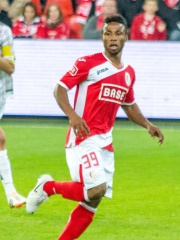
Imoh Ezekiel
1993 - Present
HPI: 36.04
Rank: 140
Abdulla Baba Fatadi
1985 - Present
HPI: 35.80
Rank: 141
Aminu Umar
1995 - Present
HPI: 35.78
Rank: 142
Ikechukwu Ezenwa
1988 - Present
HPI: 35.73
Rank: 143
Azubuike Egwuekwe
1989 - Present
HPI: 35.69
Rank: 144
Akor Adams
2000 - Present
HPI: 35.64
Rank: 145
Daniel Akpeyi
1986 - Present
HPI: 35.53
Rank: 146
Onome Ebi
1983 - Present
HPI: 35.49
Rank: 147
Mobi Oparaku
1976 - Present
HPI: 35.48
Rank: 148
Emmanuel Ekpo
1987 - Present
HPI: 35.45
Rank: 149
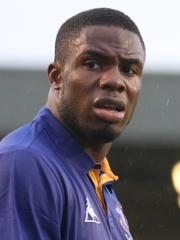
Victor Anichebe
1988 - Present
HPI: 35.40
Rank: 150
Suleiman Abdullahi
1996 - Present
HPI: 35.40
Rank: 151