Historian
Cassius Dio
155 - 235
EN.WIKIPEDIA PAGE VIEWS (PV)
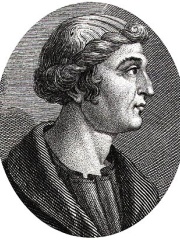
 Cassius Dio
His biography is available in 64 different languages on Wikipedia (up from 63 in 2024). Cassius Dio is the 18th most popular historian, the 133rd most popular biography from Türkiye (down from 109th in 2019) and the 3rd most popular Turkish Historian.
Cassius Dio was a Roman historian who wrote a history of Rome from the end of the Republic to the reign of Emperor Domitian.
Memorability Metrics
Page views of Cassius Dio by language
Among Historians
Among historians, Cassius Dio ranks 18 out of 561. Before him are Suetonius, Thomas Kuhn, Hecataeus of Miletus, Procopius, Thomas Babington Macaulay, and Mircea Eliade. After him are Johann Joachim Winckelmann, Manetho, William of Tyre, Leopold von Ranke, Arrian, and Fernand Braudel.
Most Popular Historians in Wikipedia
Go to all Rankings
Suetonius
70 - 126
HPI: 77.79
Rank: 12
Thomas Kuhn
1922 - 1996
HPI: 76.91
Rank: 13
Hecataeus of Miletus
550 BC - 476 BC
HPI: 76.89
Rank: 14

Procopius
500 - 560
HPI: 76.58
Rank: 15
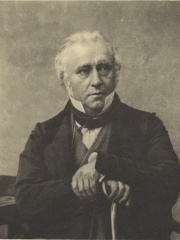
Thomas Babington Macaulay
1800 - 1859
HPI: 76.29
Rank: 16

Mircea Eliade
1907 - 1986
HPI: 76.17
Rank: 17
Cassius Dio
155 - 235
HPI: 76.14
Rank: 18

Johann Joachim Winckelmann
1717 - 1768
HPI: 75.91
Rank: 19

Manetho
201 BC - 160 BC
HPI: 75.91
Rank: 20
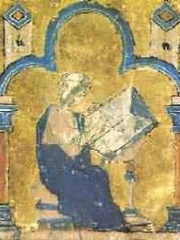
William of Tyre
1130 - 1186
HPI: 75.84
Rank: 21
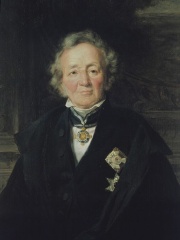
Leopold von Ranke
1795 - 1886
HPI: 75.51
Rank: 22
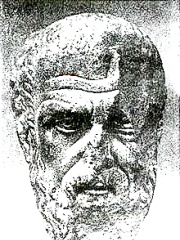
Arrian
89 - 175
HPI: 75.37
Rank: 23
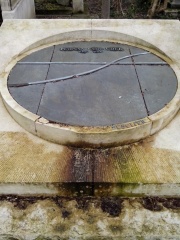
Fernand Braudel
1902 - 1985
HPI: 75.13
Rank: 24

Contemporaries
Among people born in 155, Cassius Dio ranks 3. Before him are Cao Cao, and Tertullian. After him are Sun Jian, Yuan Shu, Xiahou Dun, and Pabag. Among people deceased in 235, Cassius Dio ranks 4. Before him are Severus Alexander, Pope Pontian, and Hippolytus of Rome. After him are Claudius Aelianus, and Julia Avita Mamaea.
Others Born in 155
Go to all Rankings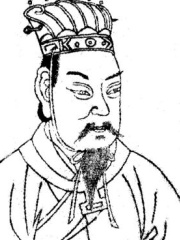
Cao Cao
MILITARY PERSONNEL
155 - 220
HPI: 80.54
Rank: 1
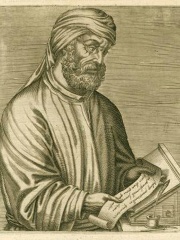
Tertullian
PHILOSOPHER
155 - 220
HPI: 78.04
Rank: 2
Cassius Dio
HISTORIAN
155 - 235
HPI: 76.14
Rank: 3
Sun Jian
MILITARY PERSONNEL
155 - 191
HPI: 71.36
Rank: 4
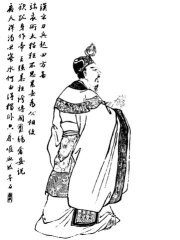
Yuan Shu
POLITICIAN
155 - 199
HPI: 69.92
Rank: 5
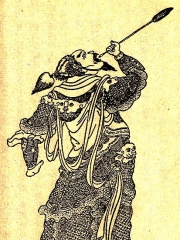
Xiahou Dun
MILITARY PERSONNEL
155 - 220
HPI: 69.55
Rank: 6
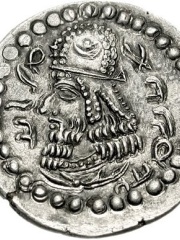
Pabag
POLITICIAN
155 - 200
HPI: 62.33
Rank: 7
Others Deceased in 235
Go to all Rankings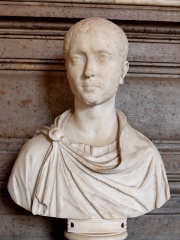
Severus Alexander
POLITICIAN
208 - 235
HPI: 84.39
Rank: 1
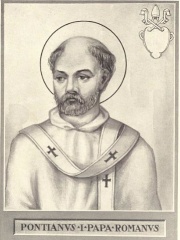
Pope Pontian
RELIGIOUS FIGURE
200 - 235
HPI: 77.78
Rank: 2
Hippolytus of Rome
RELIGIOUS FIGURE
170 - 235
HPI: 77.36
Rank: 3
Cassius Dio
HISTORIAN
155 - 235
HPI: 76.14
Rank: 4
Claudius Aelianus
WRITER
200 - 235
HPI: 75.64
Rank: 5
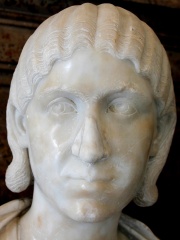
Julia Avita Mamaea
POLITICIAN
180 - 235
HPI: 68.87
Rank: 6
In Türkiye
Among people born in Türkiye, Cassius Dio ranks 133 out of NaN. Before him are Mustafa IV (1779), Chrysippus (-281), Julius Nepos (430), Anna Komnene (1083), İsmet İnönü (1884), and Fethullah Gülen (1941). After him are Proclus (412), Michael III (840), Justinian II (668), Abdullah Gül (1950), Ignatius of Antioch (35), and Tiberius III (700).
Others born in Türkiye
Go to all Rankings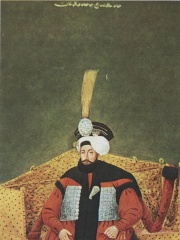
Mustafa IV
POLITICIAN
1779 - 1808
HPI: 76.29
Rank: 127
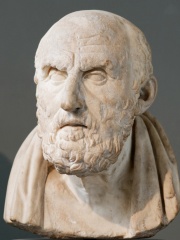
Chrysippus
PHILOSOPHER
281 BC - 208 BC
HPI: 76.28
Rank: 128
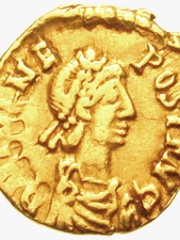
Julius Nepos
POLITICIAN
430 - 480
HPI: 76.23
Rank: 129
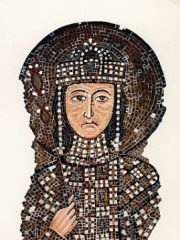
Anna Komnene
WRITER
1083 - 1153
HPI: 76.22
Rank: 130
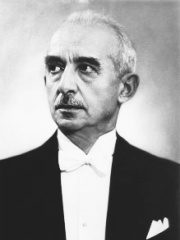
İsmet İnönü
POLITICIAN
1884 - 1973
HPI: 76.20
Rank: 131
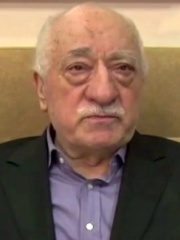
Fethullah Gülen
RELIGIOUS FIGURE
1941 - 2024
HPI: 76.15
Rank: 132
Cassius Dio
HISTORIAN
155 - 235
HPI: 76.14
Rank: 133
Proclus
PHILOSOPHER
412 - 485
HPI: 76.09
Rank: 134
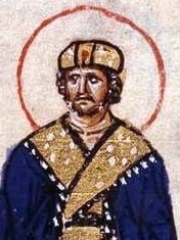
Michael III
POLITICIAN
840 - 867
HPI: 76.01
Rank: 135
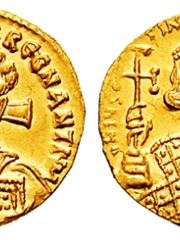
Justinian II
POLITICIAN
668 - 711
HPI: 75.96
Rank: 136
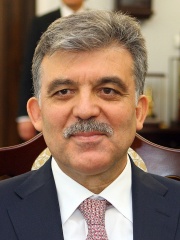
Abdullah Gül
POLITICIAN
1950 - Present
HPI: 75.95
Rank: 137
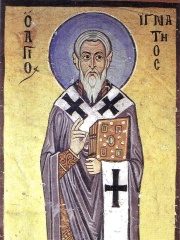
Ignatius of Antioch
RELIGIOUS FIGURE
35 - 108
HPI: 75.94
Rank: 138
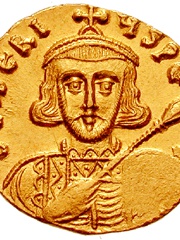
Tiberius III
POLITICIAN
700 - 705
HPI: 75.92
Rank: 139
Among Historians In Türkiye
Among historians born in Türkiye, Cassius Dio ranks 3. Before him are Herodotus (-484), and Hecataeus of Miletus (-550). After him are Arrian (89), Ali ibn al-Athir (1160), Socrates of Constantinople (380), Niketas Choniates (1155), Libanius (314), Ephorus (-400), Eutropius (320), George Kedrenos (1100), and Eunapius (349).
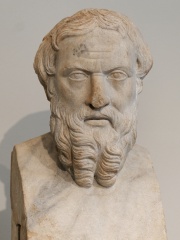
Herodotus
484 BC - 425 BC
HPI: 90.06
Rank: 1
Hecataeus of Miletus
550 BC - 476 BC
HPI: 76.89
Rank: 2
Cassius Dio
155 - 235
HPI: 76.14
Rank: 3
Arrian
89 - 175
HPI: 75.37
Rank: 4

Ali ibn al-Athir
1160 - 1233
HPI: 72.68
Rank: 5

Socrates of Constantinople
380 - 440
HPI: 72.04
Rank: 6
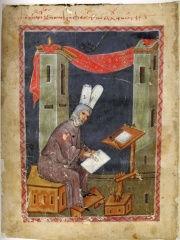
Niketas Choniates
1155 - 1217
HPI: 71.45
Rank: 7
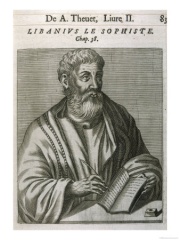
Libanius
314 - 393
HPI: 69.87
Rank: 8

Ephorus
400 BC - 330 BC
HPI: 69.19
Rank: 9
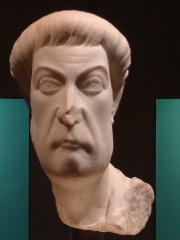
Eutropius
320 - 400
HPI: 68.75
Rank: 10

George Kedrenos
1100 - 1100
HPI: 66.85
Rank: 11

Eunapius
349 - 420
HPI: 66.64
Rank: 12




