Philosoph
Monimus
400 BC - heute
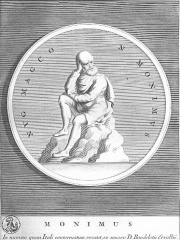
 Monimus
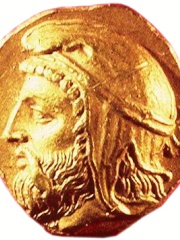
Monimos (altgriechisch Μόνιμος Mónimos, latinisiert Monimus) war ein antiker griechischer Philosoph. Er stammte aus Syrakus, lebte im 4. und 3. Jahrhundert v. Mehr auf Wikipedia lesen
His biography is available in 16 different languages on Wikipedia (up from 15 in 2024). Monimus is the 960th most popular philosoph (down from 881st in 2024), the 2,909th most popular biography from Italy (down from 2,645th in 2019) and the 67th most popular Italian Philosoph.
Memorability Metrics
Page views of Monimus by language
Among Philosophs
Among philosophs, Monimus ranks 960 out of 1,267. Before him are Keshub Chandra Sen, Lars Gustafsson, Sandra Harding, Ramananda, Derek Parfit, and Nemesius. After him are Jacques-André Naigeon, David Lewis, Wendy Brown, Northrop Frye, Rüdiger Safranski, and Bhaktisiddhanta Sarasvati.
Most Popular Philosophs in Wikipedia
Go to all Rankings
Keshub Chandra Sen
1838 - 1884
HPI: 59.58
Rank: 954

Lars Gustafsson
1936 - 2016
HPI: 59.56
Rank: 955

Sandra Harding
1935 - 2025
HPI: 59.55
Rank: 956

Ramananda
1400 - Present
HPI: 59.54
Rank: 957
Derek Parfit
1942 - 2017
HPI: 59.52
Rank: 958

Nemesius
400 - 500
HPI: 59.51
Rank: 959
Monimus
400 BC - Present
HPI: 59.50
Rank: 960
Jacques-André Naigeon
1738 - 1810
HPI: 59.50
Rank: 961
David Lewis
1941 - 2001
HPI: 59.49
Rank: 962
Wendy Brown
1955 - Present
HPI: 59.49
Rank: 963
Northrop Frye
1912 - 1991
HPI: 59.49
Rank: 964
Rüdiger Safranski
1945 - Present
HPI: 59.43
Rank: 965
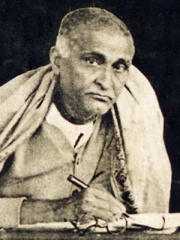
Bhaktisiddhanta Sarasvati
1874 - 1937
HPI: 59.42
Rank: 966

Contemporaries
Among people born in 400 BC, Monimus ranks 92. Before him are Cineas, Agesipolis II, Nicanor, Alcetas, Philinna, and Mahapadma Nanda. After him are Orontes II, Phaenias of Eresus, Sosipatra, Diocles of Carystus, Deidamia I of Epirus, and Taxiles.
Others Born in 400 BC
Go to all Rankings
Cineas
PHILOSOPHER
400 BC - 300 BC
HPI: 59.80
Rank: 86

Agesipolis II
POLITICIAN
400 BC - 370 BC
HPI: 59.75
Rank: 87

Nicanor
MILITARY PERSONNEL
400 BC - 310 BC
HPI: 59.70
Rank: 88
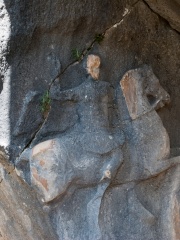
Alcetas
POLITICIAN
400 BC - 319 BC
HPI: 59.59
Rank: 89

Philinna
POLITICIAN
400 BC - 400 BC
HPI: 59.55
Rank: 90
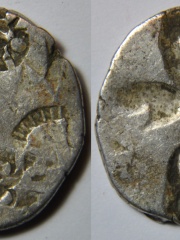
Mahapadma Nanda
POLITICIAN
400 BC - 329 BC
HPI: 59.51
Rank: 91
Monimus
PHILOSOPHER
400 BC - Present
HPI: 59.50
Rank: 92
Orontes II
POLITICIAN
400 BC - 331 BC
HPI: 59.42
Rank: 93

Phaenias of Eresus
PHILOSOPHER
400 BC - 360 BC
HPI: 59.39
Rank: 94

Sosipatra
PHILOSOPHER
400 BC - 400 BC
HPI: 59.26
Rank: 95

Diocles of Carystus
PHYSICIAN
400 BC - 300 BC
HPI: 59.23
Rank: 96

Deidamia I of Epirus
POLITICIAN
400 BC - Present
HPI: 59.23
Rank: 97
Taxiles
POLITICIAN
400 BC - 360 BC
HPI: 59.17
Rank: 98
In Italy
Among people born in Italy, Monimus ranks 2,909 out of 5,161. Before him are Gianluigi Donnarumma (1999), Armando Trovajoli (1917), Luca Carlevarijs (1663), Ulrich III, Duke of Carinthia (1220), Antonio Priuli (1548), and Carlo Rossi (1775). After him are Massimo Ambrosini (1977), Quintus Fulvius Flaccus (-300), Giosafat Barbaro (1413), Giuseppe Versaldi (1943), Marcus Lollius (-100), and Marco Basaiti (1470).
Others born in Italy
Go to all Rankings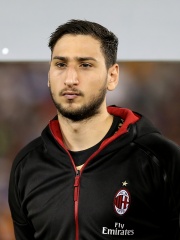
Gianluigi Donnarumma
SOCCER PLAYER
1999 - Present
HPI: 59.51
Rank: 2,903
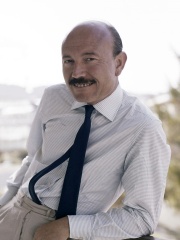
Armando Trovajoli
COMPOSER
1917 - 2013
HPI: 59.51
Rank: 2,904
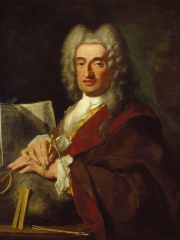
Luca Carlevarijs
PAINTER
1663 - 1730
HPI: 59.51
Rank: 2,905
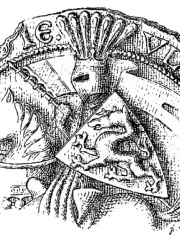
Ulrich III, Duke of Carinthia
POLITICIAN
1220 - 1269
HPI: 59.51
Rank: 2,906
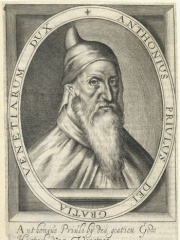
Antonio Priuli
POLITICIAN
1548 - 1623
HPI: 59.50
Rank: 2,907
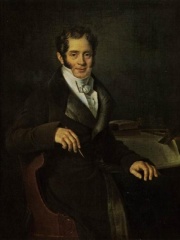
Carlo Rossi
ARCHITECT
1775 - 1849
HPI: 59.50
Rank: 2,908
Monimus
PHILOSOPHER
400 BC - Present
HPI: 59.50
Rank: 2,909
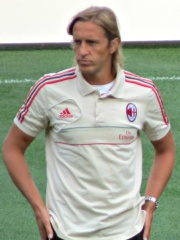
Massimo Ambrosini
SOCCER PLAYER
1977 - Present
HPI: 59.49
Rank: 2,910

Quintus Fulvius Flaccus
POLITICIAN
300 BC - 260 BC
HPI: 59.48
Rank: 2,911
Giosafat Barbaro
WRITER
1413 - 1494
HPI: 59.47
Rank: 2,912
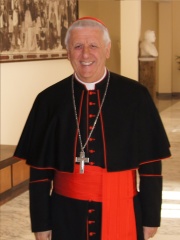
Giuseppe Versaldi
RELIGIOUS FIGURE
1943 - Present
HPI: 59.47
Rank: 2,913

Marcus Lollius
POLITICIAN
100 BC - 2
HPI: 59.46
Rank: 2,914

Marco Basaiti
PAINTER
1470 - 1530
HPI: 59.46
Rank: 2,915
Among Philosophs In Italy
Among philosophs born in Italy, Monimus ranks 67. Before him are John Italus (1025), Charondas (-600), Dietrich von Hildebrand (1889), Andrea Carlo Ferrari (1850), Camillo Berneri (1897), and Lanza del Vasto (1901). After him are Alois Riehl (1844), Mario Perniola (1941), Carlo Cattaneo (1801), Luciano Floridi (1964), Eugenio Garin (1909), and Rosi Braidotti (1954).

John Italus
1025 - 1112
HPI: 61.45
Rank: 61

Charondas
600 BC - 600 BC
HPI: 61.32
Rank: 62
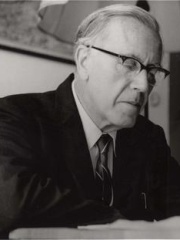
Dietrich von Hildebrand
1889 - 1977
HPI: 60.60
Rank: 63
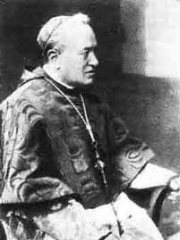
Andrea Carlo Ferrari
1850 - 1921
HPI: 60.30
Rank: 64
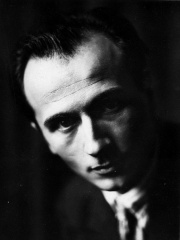
Camillo Berneri
1897 - 1937
HPI: 59.65
Rank: 65
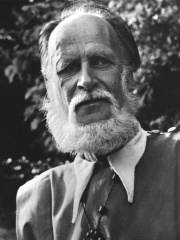
Lanza del Vasto
1901 - 1981
HPI: 59.63
Rank: 66
Monimus
400 BC - Present
HPI: 59.50
Rank: 67

Alois Riehl
1844 - 1924
HPI: 57.67
Rank: 68

Mario Perniola
1941 - 2018
HPI: 57.32
Rank: 69
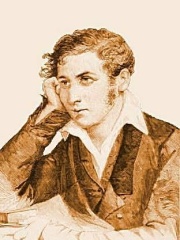
Carlo Cattaneo
1801 - 1869
HPI: 57.15
Rank: 70
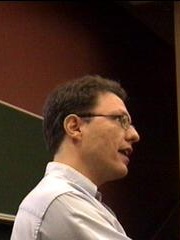
Luciano Floridi
1964 - Present
HPI: 57.10
Rank: 71

Eugenio Garin
1909 - 2004
HPI: 56.92
Rank: 72
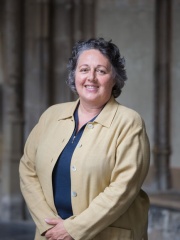
Rosi Braidotti
1954 - Present
HPI: 56.74
Rank: 73