计算机科学家
Stephen Cook
1939 - 至今
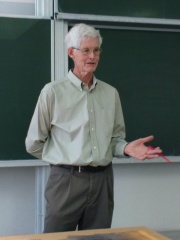
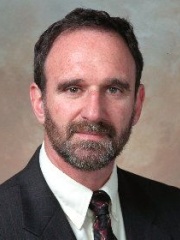
 Stephen Cook
史蒂芬·亞瑟·库克(英語:Stephen Arthur Cook,1939年12月14日—)是一名美國計算機科學家,計算複雜性理論的重要研究者。 1971年,在他的論文《定理證明程式的複雜性》(The Complexity of Theorem Proving Procedures),他整理了NP完備性的目標,亦產生了库克定理——布爾可滿足性問題是NP完備的證明。 1982年,库克获得图灵奖。因為其論文開啟了NP完備性的研究,令這個领域於之後的十年成為計算機科學中最活躍和重要的研究。 在维基百科上阅读更多
His biography is available in 34 different languages on Wikipedia. Stephen Cook is the 95th most popular 计算机科学家 (down from 72nd in 2024), the 5,131st most popular biography from United States (down from 4,309th in 2019) and the 58th most popular American 计算机科学家.
Memorability Metrics
Page views of Stephen Cook by language
Among 计算机科学家
Among 计算机科学家, Stephen Cook ranks 95 out of 245. Before him are Radia Perlman, John Henry Holland, Evan Williams, Edward Feigenbaum, Kristen Nygaard, and Gary Kildall. After him are Kathleen Antonelli, Betty Holberton, Judea Pearl, Marlyn Meltzer, Ed Roberts, and Robin Milner.
Most Popular 计算机科学家 in Wikipedia
Go to all Rankings

Radia Perlman
1951 - Present
HPI: 59.34
Rank: 89
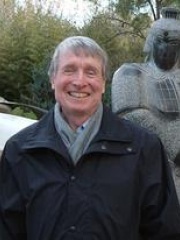
John Henry Holland
1929 - 2015
HPI: 59.26
Rank: 90
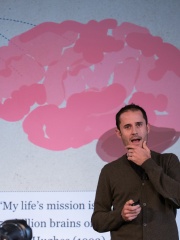
Evan Williams
1972 - Present
HPI: 59.21
Rank: 91
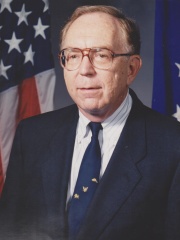
Edward Feigenbaum
1936 - Present
HPI: 59.19
Rank: 92
Kristen Nygaard
1926 - 2002
HPI: 59.03
Rank: 93

Gary Kildall
1942 - 1994
HPI: 59.02
Rank: 94
Stephen Cook
1939 - Present
HPI: 59.01
Rank: 95

Kathleen Antonelli
1921 - 2006
HPI: 58.81
Rank: 96
Betty Holberton
1917 - 2001
HPI: 58.80
Rank: 97
Judea Pearl
1936 - Present
HPI: 58.62
Rank: 98
Marlyn Meltzer
1922 - 2008
HPI: 58.38
Rank: 99
Ed Roberts
1941 - 2010
HPI: 58.33
Rank: 100
Robin Milner
1934 - 2010
HPI: 58.19
Rank: 101

Contemporaries
Among people born in 1939, Stephen Cook ranks 273. Before him are Fahrudin Jusufi, Paul Gleason, Panajot Pano, Bill Mulliken, Ekaterina Maximova, and Arik Einstein. After him are Brigitte Fontaine, Chögyam Trungpa, Giorgio Ferrini, Dariush Mehrjui, János Göröcs, and Tigran Mansurian.
Others Born in 1939
Go to all Rankings
Fahrudin Jusufi
SOCCER PLAYER
1939 - 2019
HPI: 59.12
Rank: 267
Paul Gleason
ACTOR
1939 - 2006
HPI: 59.12
Rank: 268

Panajot Pano
SOCCER PLAYER
1939 - 2010
HPI: 59.10
Rank: 269

Bill Mulliken
SWIMMER
1939 - 2014
HPI: 59.07
Rank: 270
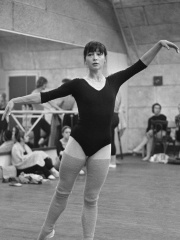
Ekaterina Maximova
POLITICIAN
1939 - 2009
HPI: 59.04
Rank: 271

Arik Einstein
SINGER
1939 - 2013
HPI: 59.03
Rank: 272
Stephen Cook
COMPUTER SCIENTIST
1939 - Present
HPI: 59.01
Rank: 273

Brigitte Fontaine
SINGER
1939 - Present
HPI: 58.96
Rank: 274

Chögyam Trungpa
WRITER
1939 - 1987
HPI: 58.95
Rank: 275
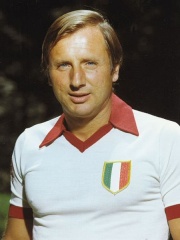
Giorgio Ferrini
SOCCER PLAYER
1939 - 1976
HPI: 58.82
Rank: 276

Dariush Mehrjui
FILM DIRECTOR
1939 - 2023
HPI: 58.75
Rank: 277

János Göröcs
SOCCER PLAYER
1939 - 2020
HPI: 58.72
Rank: 278

Tigran Mansurian
COMPOSER
1939 - Present
HPI: 58.67
Rank: 279
In United States
Among people born in United States, Stephen Cook ranks 5,131 out of 20,380. Before him are Joe Keery (1992), Ken Huszagh (1891), Walton Walker (1889), Al Foster (1943), Jonathan Littell (1967), and Renée Taylor (1933). After him are Robert McKee (1941), Alan Lomax (1915), Grace Bumbry (1937), Birdman (1969), Martha Hyer (1924), and John Lewis (1920).
Others born in United States
Go to all Rankings
Joe Keery
ACTOR
1992 - Present
HPI: 59.02
Rank: 5,125
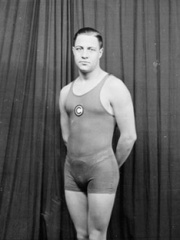
Ken Huszagh
SWIMMER
1891 - 1950
HPI: 59.01
Rank: 5,126
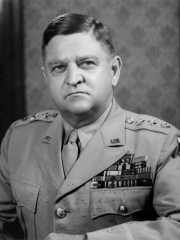
Walton Walker
MILITARY PERSONNEL
1889 - 1950
HPI: 59.01
Rank: 5,127

Al Foster
MUSICIAN
1943 - 2025
HPI: 59.01
Rank: 5,128

Jonathan Littell
WRITER
1967 - Present
HPI: 59.01
Rank: 5,129

Renée Taylor
ACTOR
1933 - Present
HPI: 59.01
Rank: 5,130
Stephen Cook
COMPUTER SCIENTIST
1939 - Present
HPI: 59.01
Rank: 5,131
Robert McKee
WRITER
1941 - Present
HPI: 59.01
Rank: 5,132
Alan Lomax
BUSINESSPERSON
1915 - 2002
HPI: 59.01
Rank: 5,133
Grace Bumbry
SINGER
1937 - 2023
HPI: 59.00
Rank: 5,134

Birdman
SINGER
1969 - Present
HPI: 59.00
Rank: 5,135

Martha Hyer
ACTOR
1924 - 2014
HPI: 59.00
Rank: 5,136
John Lewis
MUSICIAN
1920 - 2001
HPI: 59.00
Rank: 5,137
Among 计算机科学家 In United States
Among 计算机科学家 born in United States, Stephen Cook ranks 58. Before him are Martin Hellman (1945), Radia Perlman (1951), John Henry Holland (1929), Evan Williams (1972), Edward Feigenbaum (1936), and Gary Kildall (1942). After him are Betty Holberton (1917), Marlyn Meltzer (1922), Ed Roberts (1941), Charles P. Thacker (1943), Eric S. Raymond (1957), and Alan Cooper (1952).
Martin Hellman
1945 - Present
HPI: 59.58
Rank: 52
Radia Perlman
1951 - Present
HPI: 59.34
Rank: 53
John Henry Holland
1929 - 2015
HPI: 59.26
Rank: 54
Evan Williams
1972 - Present
HPI: 59.21
Rank: 55
Edward Feigenbaum
1936 - Present
HPI: 59.19
Rank: 56
Gary Kildall
1942 - 1994
HPI: 59.02
Rank: 57
Stephen Cook
1939 - Present
HPI: 59.01
Rank: 58
Betty Holberton
1917 - 2001
HPI: 58.80
Rank: 59
Marlyn Meltzer
1922 - 2008
HPI: 58.38
Rank: 60
Ed Roberts
1941 - 2010
HPI: 58.33
Rank: 61

Charles P. Thacker
1943 - 2017
HPI: 58.09
Rank: 62

Eric S. Raymond
1957 - Present
HPI: 57.96
Rank: 63

Alan Cooper
1952 - Present
HPI: 57.55
Rank: 64