政治家
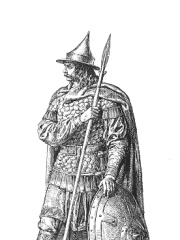
Lestek
870 - 930
ZH.WIKIPEDIA PAGE VIEWS (PV)
 Lestek
萊謝克(波蘭語:Lestek,約880年—約940年),波蘭人的公爵,皮雅斯特王朝的早期君主。 根據高盧無名氏所著《波蘭王公事蹟》,萊謝克是謝莫維特之子,謝莫米斯烏的父親。 在维基百科上阅读更多
他的传记在维基百科上提供 28 种语言版本(较 2024 年的 27 种增加)。Lestek在最受欢迎的政治家中排名第6278位(较 2024 年的第5579位下降),在波兰人物传记中排名第342位(较 2019 年的第323位下降),并在最受欢迎的波兰政治家中排名第87位。
Memorability Metrics
Page views of Lestek by language
Among 政治家
Among 政治家, Lestek ranks 6,278 out of 19,576. Before him are Theudoald, Louise of France, William V, Duke of Aquitaine, Gondioc, Joaquín Balaguer, and Porcius Festus. After him are Gerardo Machado, Diane de France, Glafcos Clerides, Martina, Salome I, and Kurt Schumacher.
Most Popular 政治家 in Wikipedia
Go to all Rankings

Theudoald
708 - 741
HPI: 64.98
Rank: 6,274
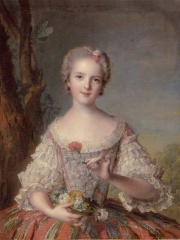
Louise of France
1737 - 1787
HPI: 64.98
Rank: 6,275

William V, Duke of Aquitaine
969 - 1030
HPI: 64.98
Rank: 6,276

Gondioc
450 - 473
HPI: 64.98
Rank: 6,277
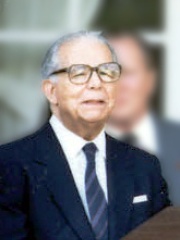
Joaquín Balaguer
1906 - 2002
HPI: 64.98
Rank: 6,278
Porcius Festus
HPI: 64.98
Rank: 6,279
Lestek
870 - 930
HPI: 64.97
Rank: 6,280
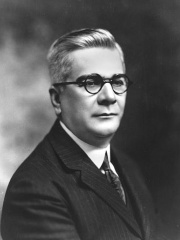
Gerardo Machado
1871 - 1939
HPI: 64.97
Rank: 6,281
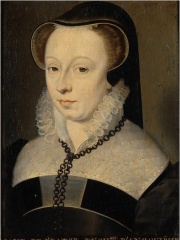
Diane de France
1538 - 1619
HPI: 64.97
Rank: 6,282
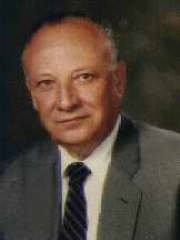
Glafcos Clerides
1919 - 2013
HPI: 64.97
Rank: 6,283
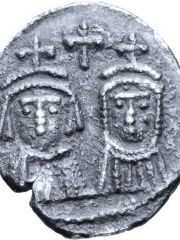
Martina
598 - 641
HPI: 64.97
Rank: 6,284

Salome I
65 BC - 10
HPI: 64.97
Rank: 6,285
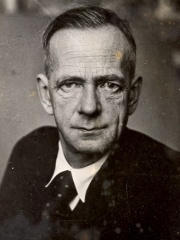
Kurt Schumacher
1895 - 1952
HPI: 64.97
Rank: 6,286

Contemporaries
Among people born in 870, Lestek ranks 5. Before him are Romanos I Lekapenos, Pope Leo V, Alexander, and Zwentibold. After him are Fulk I, Count of Anjou, Petar of Serbia, and Ebalus, Duke of Aquitaine. Among people deceased in 930, Lestek ranks 4. Before him are Rollo, Abū Kāmil Shujāʿ ibn Aslam, and Emperor Daigo. After him are Ibn Wahshiyya, Hucbald, Guy, Margrave of Tuscany, and Þjóðólfr of Hvinir.
Others Born in 870
Go to all Rankings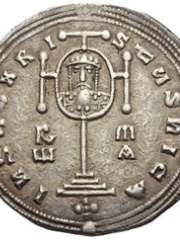
Romanos I Lekapenos
POLITICIAN
870 - 948
HPI: 74.39
Rank: 1
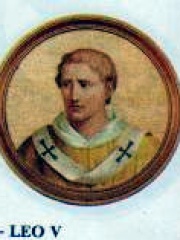
Pope Leo V
RELIGIOUS FIGURE
870 - 905
HPI: 73.72
Rank: 2
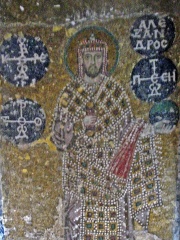
Alexander
POLITICIAN
870 - 913
HPI: 71.82
Rank: 3
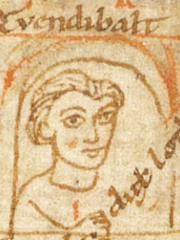
Zwentibold
POLITICIAN
870 - 900
HPI: 68.09
Rank: 4
Lestek
POLITICIAN
870 - 930
HPI: 64.97
Rank: 5

Fulk I, Count of Anjou
POLITICIAN
870 - 942
HPI: 64.93
Rank: 6
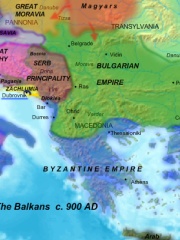
Petar of Serbia
POLITICIAN
870 - 917
HPI: 60.20
Rank: 7

Ebalus, Duke of Aquitaine
NOBLEMAN
870 - 934
HPI: 59.70
Rank: 8
Others Deceased in 930
Go to all Rankings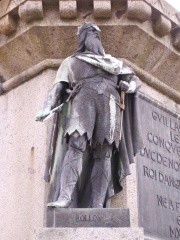
Rollo
NOBLEMAN
846 - 930
HPI: 83.87
Rank: 1

Abū Kāmil Shujāʿ ibn Aslam
MATHEMATICIAN
850 - 930
HPI: 66.86
Rank: 2
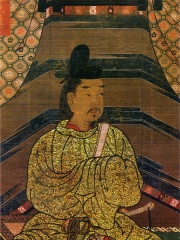
Emperor Daigo
POLITICIAN
885 - 930
HPI: 65.15
Rank: 3
Lestek
POLITICIAN
870 - 930
HPI: 64.97
Rank: 4
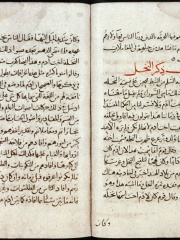
Ibn Wahshiyya
HISTORIAN
900 - 930
HPI: 61.75
Rank: 5
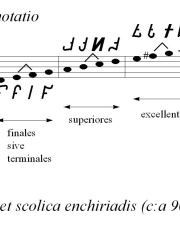
Hucbald
COMPOSER
840 - 930
HPI: 60.46
Rank: 6

Guy, Margrave of Tuscany
NOBLEMAN
900 - 930
HPI: 59.89
Rank: 7

Þjóðólfr of Hvinir
WRITER
900 - 930
HPI: 58.29
Rank: 8
In 波兰
Among people born in 波兰, Lestek ranks 342 out of NaN. Before him are Heinz Reinefarth (1903), Ivan Vyhovsky (1608), Barbara Brylska (1941), Roman Dmowski (1864), Maximilian von Prittwitz (1848), and Walther Nehring (1892). After him are Kurt Schumacher (1895), Hans Jeschonnek (1899), Alfred Flatow (1869), Wojciech Szczęsny (1990), Moïse Kisling (1891), and Duchess Maria Dorothea of Württemberg (1797).
Others born in 波兰
Go to all Rankings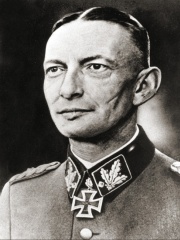
Heinz Reinefarth
MILITARY PERSONNEL
1903 - 1979
HPI: 65.12
Rank: 336
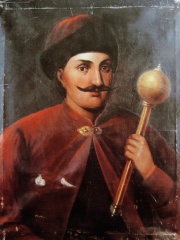
Ivan Vyhovsky
POLITICIAN
1608 - 1664
HPI: 65.02
Rank: 337
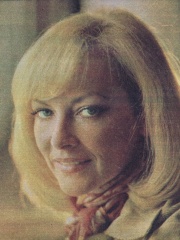
Barbara Brylska
ACTOR
1941 - Present
HPI: 65.02
Rank: 338
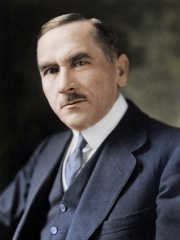
Roman Dmowski
POLITICIAN
1864 - 1939
HPI: 65.00
Rank: 339
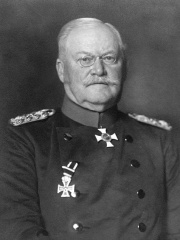
Maximilian von Prittwitz
MILITARY PERSONNEL
1848 - 1917
HPI: 64.99
Rank: 340
Walther Nehring
MILITARY PERSONNEL
1892 - 1983
HPI: 64.98
Rank: 341
Lestek
POLITICIAN
870 - 930
HPI: 64.97
Rank: 342
Kurt Schumacher
POLITICIAN
1895 - 1952
HPI: 64.97
Rank: 343
Hans Jeschonnek
POLITICIAN
1899 - 1943
HPI: 64.96
Rank: 344
Alfred Flatow
GYMNAST
1869 - 1942
HPI: 64.93
Rank: 345
Wojciech Szczęsny
SOCCER PLAYER
1990 - Present
HPI: 64.92
Rank: 346
Moïse Kisling
PAINTER
1891 - 1953
HPI: 64.92
Rank: 347
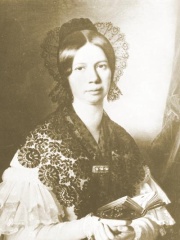
Duchess Maria Dorothea of Württemberg
NOBLEMAN
1797 - 1855
HPI: 64.91
Rank: 348
Among 政治家 In 波兰
Among 政治家 born in 波兰, Lestek ranks 87. Before him are Count Kasimir Felix Badeni (1846), Konstanty Kalinowski (1838), Richeza of Poland, Queen of Sweden (1116), Bolesław V the Chaste (1226), Ivan Vyhovsky (1608), and Roman Dmowski (1864). After him are Kurt Schumacher (1895), Hans Jeschonnek (1899), Józef Cyrankiewicz (1911), Muazzez Sultan (1628), Henry the Bearded (1163), and Bolesław IV the Curly (1120).
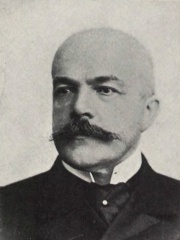
Count Kasimir Felix Badeni
1846 - 1909
HPI: 65.40
Rank: 81
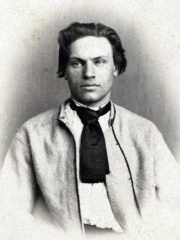
Konstanty Kalinowski
1838 - 1864
HPI: 65.39
Rank: 82

Richeza of Poland, Queen of Sweden
1116 - 1156
HPI: 65.35
Rank: 83
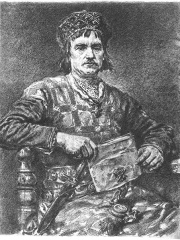
Bolesław V the Chaste
1226 - 1279
HPI: 65.27
Rank: 84
Ivan Vyhovsky
1608 - 1664
HPI: 65.02
Rank: 85
Roman Dmowski
1864 - 1939
HPI: 65.00
Rank: 86
Lestek
870 - 930
HPI: 64.97
Rank: 87
Kurt Schumacher
1895 - 1952
HPI: 64.97
Rank: 88
Hans Jeschonnek
1899 - 1943
HPI: 64.96
Rank: 89
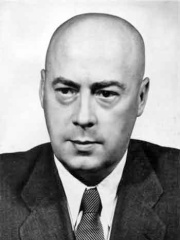
Józef Cyrankiewicz
1911 - 1989
HPI: 64.74
Rank: 90
Muazzez Sultan
1628 - Present
HPI: 64.69
Rank: 91
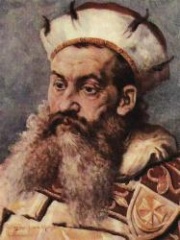
Henry the Bearded
1163 - 1238
HPI: 64.64
Rank: 92
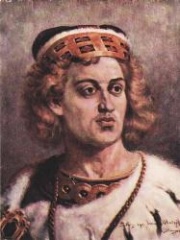
Bolesław IV the Curly
1120 - 1173
HPI: 64.58
Rank: 93