Политик
Valamir
420 - 465
RU.WIKIPEDIA PAGE VIEWS (PV)

 Valamir
Валами́р (гот. 𐍅𐌰𐌻𐌰𐌼𐌴𐍂𐍃, лат. Valamirus) — король остготов, правил приблизительно в 440—469 годах, из династии Амалов. Старший сын Вандалара. Подробнее в Википедии
His biography is available in 25 different languages on Wikipedia. Valamir is the 6,487th most popular политик (down from 5,876th in 2024), the 187th most popular biography from Hungary (down from 174th in 2019) and the 67th most popular Hungarian Политик.
Memorability Metrics
Page views of Valamir by language
Among Политик
Among политик, Valamir ranks 6,487 out of 19,576. Before him are Ernest Frederick III, Duke of Saxe-Hildburghausen, Gundemar, Elpidio Quirino, Infanta Isabel Maria of Braganza, Emperor Go-Murakami, and Andronikos Doukas Angelos. After him are Tai Geng, Ḫattušili II, Prince Sadruddin Aga Khan, Marcus Annius Verus Caesar, Theodora of Trebizond, and Alberic I of Spoleto.
Most Popular Политик in Wikipedia
Go to all Rankings
Ernest Frederick III, Duke of Saxe-Hildburghausen
1727 - 1780
HPI: 64.76
Rank: 6,483
Gundemar
600 - 612
HPI: 64.76
Rank: 6,484
Elpidio Quirino
1890 - 1956
HPI: 64.76
Rank: 6,485
Infanta Isabel Maria of Braganza
1801 - 1876
HPI: 64.76
Rank: 6,486
Emperor Go-Murakami
1328 - 1368
HPI: 64.76
Rank: 6,487

Andronikos Doukas Angelos
1130 - 1185
HPI: 64.75
Rank: 6,488
Valamir
420 - 465
HPI: 64.75
Rank: 6,489

Tai Geng
1700 BC - 1667 BC
HPI: 64.75
Rank: 6,490

Ḫattušili II
1350 BC - 1400 BC
HPI: 64.75
Rank: 6,491
Prince Sadruddin Aga Khan
1933 - 2003
HPI: 64.75
Rank: 6,492
Marcus Annius Verus Caesar
162 - 169
HPI: 64.75
Rank: 6,493
Theodora of Trebizond
1253 - 1285
HPI: 64.75
Rank: 6,494

Alberic I of Spoleto
900 - 924
HPI: 64.75
Rank: 6,495

Contemporaries
Among people born in 420, Valamir ranks 8. Before him are Anthemius, Majorian, Orestes, Libius Severus, Thorismund, and Julia of Corsica. After him is Rutilius Claudius Namatianus. Among people deceased in 465, Valamir ranks 3. Before him are Libius Severus, and Aegidius.
Others Born in 420
Go to all Rankings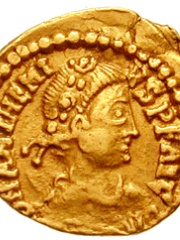
Anthemius
POLITICIAN
420 - 472
HPI: 73.55
Rank: 2
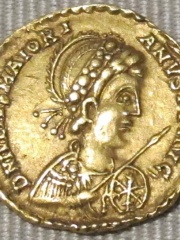
Majorian
POLITICIAN
420 - 461
HPI: 73.33
Rank: 3

Orestes
POLITICIAN
420 - 476
HPI: 73.26
Rank: 4
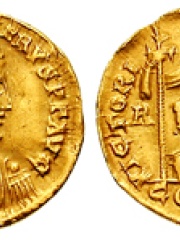
Libius Severus
POLITICIAN
420 - 465
HPI: 72.34
Rank: 5
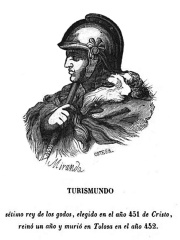
Thorismund
POLITICIAN
420 - 453
HPI: 69.87
Rank: 6
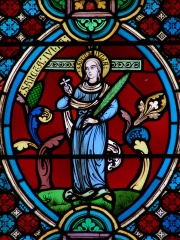
Julia of Corsica
RELIGIOUS FIGURE
420 - 450
HPI: 69.83
Rank: 7
Valamir
POLITICIAN
420 - 465
HPI: 64.75
Rank: 8

Rutilius Claudius Namatianus
POLITICIAN
420 - 500
HPI: 63.37
Rank: 9
Others Deceased in 465
Go to all RankingsLibius Severus
POLITICIAN
420 - 465
HPI: 72.34
Rank: 1

Aegidius
MILITARY PERSONNEL
450 - 465
HPI: 66.10
Rank: 2
Valamir
POLITICIAN
420 - 465
HPI: 64.75
Rank: 3
In Hungary
Among people born in Hungary, Valamir ranks 187 out of 1,077. Before him are Aladár Gerevich (1910), Ferenc Bene (1944), Alfréd Hajós (1878), Ferenc Deák (1803), Franz Xaver von Zach (1754), and Constance of Hungary (1180). After him are Hannah Szenes (1921), Gyula Lóránt (1923), Gyula Zsengellér (1915), István Dobi (1898), Attila József (1905), and Michael Balint (1896).
Others born in Hungary
Go to all Rankings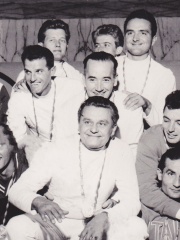
Aladár Gerevich
ATHLETE
1910 - 1991
HPI: 65.11
Rank: 181
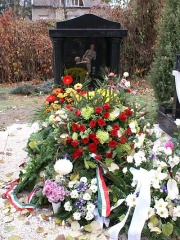
Ferenc Bene
SOCCER PLAYER
1944 - 2006
HPI: 65.06
Rank: 182
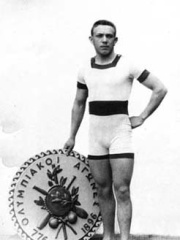
Alfréd Hajós
SWIMMER
1878 - 1955
HPI: 65.03
Rank: 183
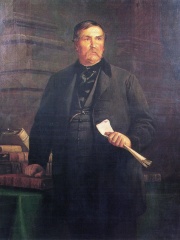
Ferenc Deák
POLITICIAN
1803 - 1876
HPI: 64.97
Rank: 184
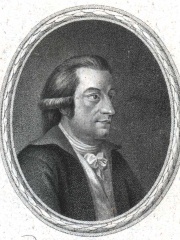
Franz Xaver von Zach
ASTRONOMER
1754 - 1832
HPI: 64.89
Rank: 185
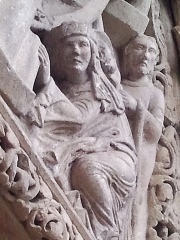
Constance of Hungary
COMPANION
1180 - 1240
HPI: 64.86
Rank: 186
Valamir
POLITICIAN
420 - 465
HPI: 64.75
Rank: 187

Hannah Szenes
WRITER
1921 - 1944
HPI: 64.70
Rank: 188
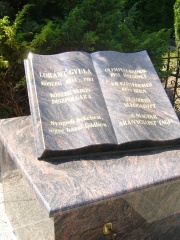
Gyula Lóránt
SOCCER PLAYER
1923 - 1981
HPI: 64.67
Rank: 189
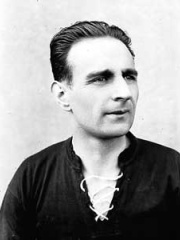
Gyula Zsengellér
SOCCER PLAYER
1915 - 1999
HPI: 64.61
Rank: 190
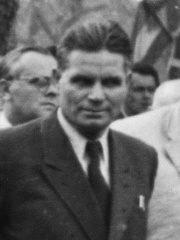
István Dobi
POLITICIAN
1898 - 1968
HPI: 64.60
Rank: 191
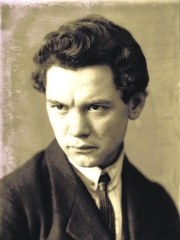
Attila József
WRITER
1905 - 1937
HPI: 64.58
Rank: 192
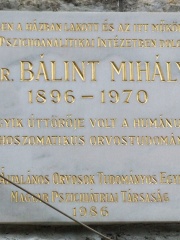
Michael Balint
PSYCHOLOGIST
1896 - 1970
HPI: 64.57
Rank: 193
Among Политик In Hungary
Among политик born in Hungary, Valamir ranks 67. Before him are Imi Lichtenfeld (1910), Ladislaus Hunyadi (1431), Árpád Göncz (1922), László Csatáry (1915), Péter Medgyessy (1942), and Ferenc Deák (1803). After him are István Dobi (1898), Miklós Németh (1948), Ferenc Fricsay (1914), Ferenc Gyulay (1799), Stephan Burián von Rajecz (1851), and Teddy Kollek (1911).

Imi Lichtenfeld
1910 - 1998
HPI: 65.61
Rank: 61
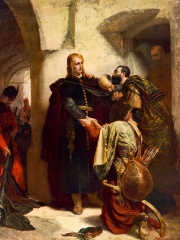
Ladislaus Hunyadi
1431 - 1457
HPI: 65.44
Rank: 62
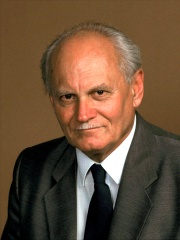
Árpád Göncz
1922 - 2015
HPI: 65.36
Rank: 63

László Csatáry
1915 - 2013
HPI: 65.30
Rank: 64
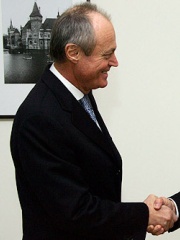
Péter Medgyessy
1942 - Present
HPI: 65.28
Rank: 65
Ferenc Deák
1803 - 1876
HPI: 64.97
Rank: 66
Valamir
420 - 465
HPI: 64.75
Rank: 67
István Dobi
1898 - 1968
HPI: 64.60
Rank: 68
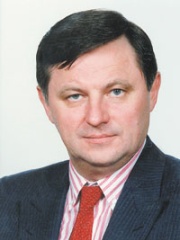
Miklós Németh
1948 - Present
HPI: 64.39
Rank: 69
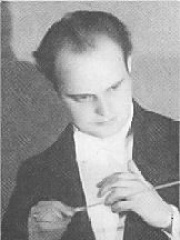
Ferenc Fricsay
1914 - 1963
HPI: 63.98
Rank: 70
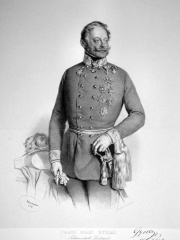
Ferenc Gyulay
1799 - 1868
HPI: 63.66
Rank: 71
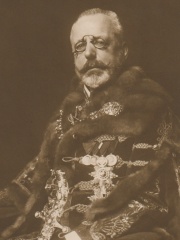
Stephan Burián von Rajecz
1851 - 1922
HPI: 63.63
Rank: 72
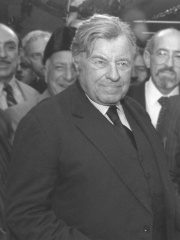
Teddy Kollek
1911 - 2007
HPI: 63.56
Rank: 73