Physicist
Robbert Dijkgraaf
1960 - today

 Robbert Dijkgraaf
His biography is available in 15 different languages on Wikipedia. Robbert Dijkgraaf is the 814th most popular physicist, the 1,063rd most popular biography from Netherlands and the 25th most popular Dutch Physicist.
Robbert Dijkgraaf is a Dutch mathematical physicist and string theorist known for his contributions to the understanding of quantum gravity and the interface between mathematics and physics. He is also recognized for his role as the director of the Institute for Advanced Study in Princeton, New Jersey.
Memorability Metrics
Page views of Robbert Dijkgraaf by language
Among Physicists
Among physicists, Robbert Dijkgraaf ranks 814 out of 851. Before him are Howard Georgi, Arthur Wightman, Cumrun Vafa, Juan Ignacio Cirac Sasturain, Daniel Kleppner, and Sylvia Fedoruk. After him are Raja Ramanna, J. Richard Gott, Sidney Drell, Edwin Thompson Jaynes, Albert-László Barabási, and Sabine Hossenfelder.
Most Popular Physicists in Wikipedia
Go to all Rankings

Howard Georgi
1947 - Present
HPI: 49.91
Rank: 808

Arthur Wightman
1922 - 2013
HPI: 49.85
Rank: 809
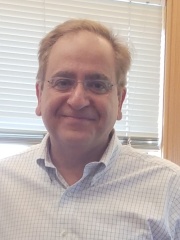
Cumrun Vafa
1960 - Present
HPI: 49.57
Rank: 810
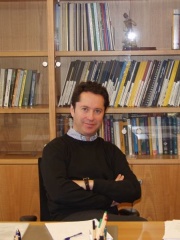
Juan Ignacio Cirac Sasturain
1965 - Present
HPI: 49.51
Rank: 811

Daniel Kleppner
1932 - 2025
HPI: 49.43
Rank: 812
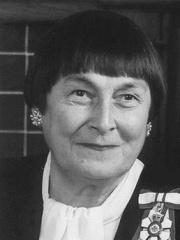
Sylvia Fedoruk
1927 - 2012
HPI: 49.41
Rank: 813
Robbert Dijkgraaf
1960 - Present
HPI: 49.28
Rank: 814
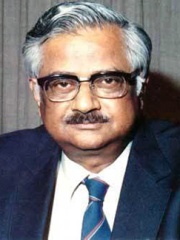
Raja Ramanna
1925 - 2004
HPI: 49.20
Rank: 815
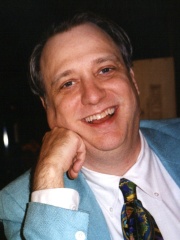
J. Richard Gott
1947 - Present
HPI: 49.03
Rank: 816

Sidney Drell
1926 - 2016
HPI: 48.87
Rank: 817
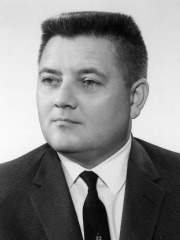
Edwin Thompson Jaynes
1922 - 1998
HPI: 48.83
Rank: 818

Albert-László Barabási
1967 - Present
HPI: 48.61
Rank: 819

Sabine Hossenfelder
1976 - Present
HPI: 48.55
Rank: 820

Contemporaries
Among people born in 1960, Robbert Dijkgraaf ranks 664. Before him are Deb Haaland, Ivailo Marinov, Volker Beck, Håkan Ericson, Ole Gunnar Fidjestøl, and Udo Ulfkotte. After him are Andrea Mandorlini, Masahiko Nishimura, Vladimir Kim, Philippe Sands, Masaaki Kanno, and Diane Williams.
Others Born in 1960
Go to all Rankings
Deb Haaland
POLITICIAN
1960 - Present
HPI: 49.33
Rank: 658

Ivailo Marinov
BOXER
1960 - Present
HPI: 49.32
Rank: 659
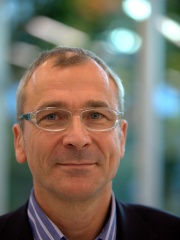
Volker Beck
POLITICIAN
1960 - Present
HPI: 49.32
Rank: 660

Håkan Ericson
COACH
1960 - Present
HPI: 49.31
Rank: 661

Ole Gunnar Fidjestøl
SKIER
1960 - Present
HPI: 49.30
Rank: 662
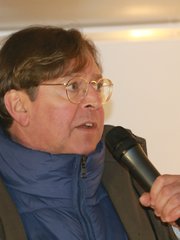
Udo Ulfkotte
WRITER
1960 - 2017
HPI: 49.28
Rank: 663
Robbert Dijkgraaf
PHYSICIST
1960 - Present
HPI: 49.28
Rank: 664
Andrea Mandorlini
COACH
1960 - Present
HPI: 49.28
Rank: 665

Masahiko Nishimura
ACTOR
1960 - Present
HPI: 49.25
Rank: 666

Vladimir Kim
BUSINESSPERSON
1960 - Present
HPI: 49.21
Rank: 667

Philippe Sands
LAWYER
1960 - Present
HPI: 49.19
Rank: 668

Masaaki Kanno
SOCCER PLAYER
1960 - Present
HPI: 49.18
Rank: 669

Diane Williams
ATHLETE
1960 - Present
HPI: 49.14
Rank: 670
In Netherlands
Among people born in Netherlands, Robbert Dijkgraaf ranks 1,063 out of NaN. Before him are Gène Hanssen (1959), Noussair Mazraoui (1997), Orlando Engelaar (1979), Frank Dikötter (1961), Steven Berghuis (1991), and Marten de Roon (1991). After him are Karim El Ahmadi (1985), Ellen van Langen (1966), Peter van Vossen (1968), Rik Smits (1966), Jos Lansink (1961), and Robert Gesink (1986).
Others born in Netherlands
Go to all Rankings
Gène Hanssen
SOCCER PLAYER
1959 - Present
HPI: 49.36
Rank: 1,057

Noussair Mazraoui
SOCCER PLAYER
1997 - Present
HPI: 49.36
Rank: 1,058
Orlando Engelaar
SOCCER PLAYER
1979 - Present
HPI: 49.34
Rank: 1,059

Frank Dikötter
HISTORIAN
1961 - Present
HPI: 49.32
Rank: 1,060
Steven Berghuis
SOCCER PLAYER
1991 - Present
HPI: 49.31
Rank: 1,061

Marten de Roon
SOCCER PLAYER
1991 - Present
HPI: 49.29
Rank: 1,062
Robbert Dijkgraaf
PHYSICIST
1960 - Present
HPI: 49.28
Rank: 1,063
Karim El Ahmadi
SOCCER PLAYER
1985 - Present
HPI: 49.24
Rank: 1,064

Ellen van Langen
ATHLETE
1966 - Present
HPI: 49.24
Rank: 1,065

Peter van Vossen
SOCCER PLAYER
1968 - Present
HPI: 49.23
Rank: 1,066

Rik Smits
BASKETBALL PLAYER
1966 - Present
HPI: 49.21
Rank: 1,067
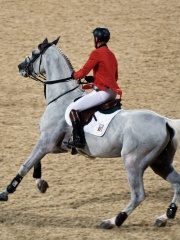
Jos Lansink
ATHLETE
1961 - Present
HPI: 49.18
Rank: 1,068

Robert Gesink
CYCLIST
1986 - Present
HPI: 49.13
Rank: 1,069
Among Physicists In Netherlands
Among physicists born in Netherlands, Robbert Dijkgraaf ranks 25. Before him are Balthasar van der Pol (1889), Abraham Pais (1918), Jan Burgers (1895), Dirk Coster (1889), Antonius van den Broek (1870), and Kees Schouhamer Immink (1946).
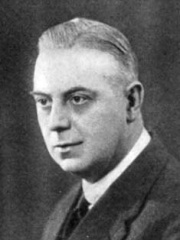
Balthasar van der Pol
1889 - 1959
HPI: 56.65
Rank: 19

Abraham Pais
1918 - 2000
HPI: 56.63
Rank: 20
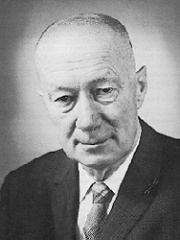
Jan Burgers
1895 - 1981
HPI: 56.41
Rank: 21

Dirk Coster
1889 - 1950
HPI: 54.81
Rank: 22
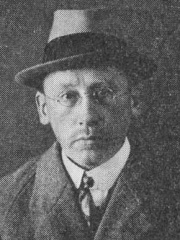
Antonius van den Broek
1870 - 1926
HPI: 54.51
Rank: 23

Kees Schouhamer Immink
1946 - Present
HPI: 51.25
Rank: 24
Robbert Dijkgraaf
1960 - Present
HPI: 49.28
Rank: 25