Politician
Regalianus
250 - 260
EN.WIKIPEDIA PAGE VIEWS (PV)
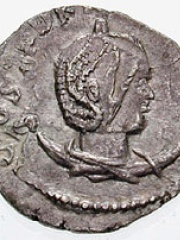
 Regalianus
His biography is available in 29 different languages on Wikipedia. Regalianus is the 3,264th most popular politician (up from 8,784th in 2024), the 53rd most popular biography from Romania (up from 163rd in 2019) and the 28th most popular Romanian Politician.
Memorability Metrics
Page views of Regalianus by language
Among Politicians
Among politicians, Regalianus ranks 3,264 out of 19,576. Before him are Otto Ernst Remer, Konrad Henlein, Junichiro Koizumi, Yazdegerd II, Gebre Mesqel Lalibela, and Nobusuke Kishi. After him are Elio Di Rupo, Günter Schabowski, Wang Xizhi, Gudrun Burwitz, Biligtü Khan Ayushiridara, and Musa ibn Nusayr.
Most Popular Politicians in Wikipedia
Go to all Rankings
Otto Ernst Remer
1912 - 1997
HPI: 69.21
Rank: 3,260
Konrad Henlein
1898 - 1945
HPI: 69.21
Rank: 3,261
Junichiro Koizumi
1942 - Present
HPI: 69.21
Rank: 3,262
Yazdegerd II
500 - 457
HPI: 69.20
Rank: 3,263

Gebre Mesqel Lalibela
1200 - 1221
HPI: 69.20
Rank: 3,264

Nobusuke Kishi
1896 - 1987
HPI: 69.20
Rank: 3,265
Regalianus
250 - 260
HPI: 69.20
Rank: 3,266

Elio Di Rupo
1951 - Present
HPI: 69.20
Rank: 3,267
Günter Schabowski
1929 - 2015
HPI: 69.19
Rank: 3,268

Wang Xizhi
303 - 361
HPI: 69.19
Rank: 3,269

Gudrun Burwitz
1929 - 2018
HPI: 69.19
Rank: 3,270

Biligtü Khan Ayushiridara
1338 - 1378
HPI: 69.19
Rank: 3,271
Musa ibn Nusayr
640 - 716
HPI: 69.18
Rank: 3,272

Contemporaries
Among people born in 250, Regalianus ranks 18. Before him are Martinian, Carinus, Saint Maurice, Heliodorus of Emesa, Bahram I, and Hormizd I. After him are Laelianus, Tetricus I, Postumus, Bahram II, Saint Chrysogonus, and Marcus Aurelius Marius. Among people deceased in 260, Regalianus ranks 2. Before him is Valerian. After him are Saloninus, Cao Mao, Marcus Minucius Felix, Sun Liang, and Ingenuus.
Others Born in 250
Go to all Rankings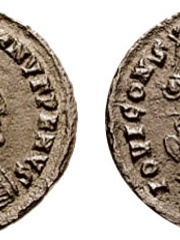
Martinian
POLITICIAN
250 - 324
HPI: 73.09
Rank: 12
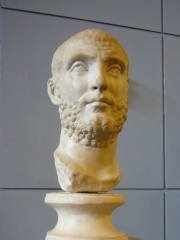
Carinus
POLITICIAN
250 - 285
HPI: 72.69
Rank: 13
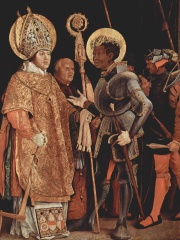
Saint Maurice
RELIGIOUS FIGURE
250 - 287
HPI: 72.41
Rank: 14

Heliodorus of Emesa
WRITER
250 - 400
HPI: 69.89
Rank: 15
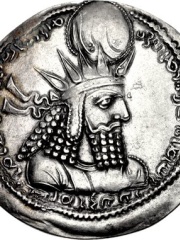
Bahram I
POLITICIAN
250 - 276
HPI: 69.85
Rank: 16
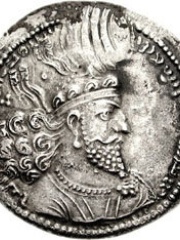
Hormizd I
POLITICIAN
250 - 273
HPI: 69.38
Rank: 17
Regalianus
POLITICIAN
250 - 260
HPI: 69.20
Rank: 18
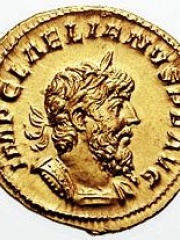
Laelianus
POLITICIAN
250 - 269
HPI: 68.75
Rank: 19
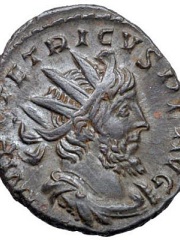
Tetricus I
POLITICIAN
250 - 274
HPI: 68.73
Rank: 20
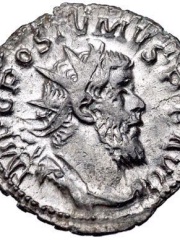
Postumus
POLITICIAN
250 - 269
HPI: 68.59
Rank: 21
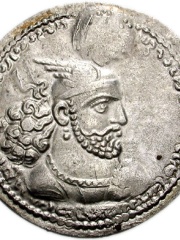
Bahram II
POLITICIAN
250 - 293
HPI: 68.39
Rank: 22
Saint Chrysogonus
RELIGIOUS FIGURE
250 - 303
HPI: 66.40
Rank: 23
Marcus Aurelius Marius
POLITICIAN
250 - 269
HPI: 66.03
Rank: 24
Others Deceased in 260
Go to all Rankings
Valerian
POLITICIAN
200 - 260
HPI: 77.94
Rank: 1
Regalianus
POLITICIAN
250 - 260
HPI: 69.20
Rank: 2
Saloninus
POLITICIAN
242 - 260
HPI: 68.96
Rank: 3

Cao Mao
POLITICIAN
241 - 260
HPI: 67.37
Rank: 4

Marcus Minucius Felix
WRITER
110 - 260
HPI: 67.16
Rank: 5

Sun Liang
POLITICIAN
243 - 260
HPI: 66.24
Rank: 6
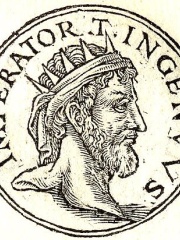
Ingenuus
POLITICIAN
200 - 260
HPI: 63.50
Rank: 7
In Romania
Among people born in Romania, Regalianus ranks 53 out of NaN. Before him are Milan I of Serbia (1854), Alexandru Ioan Cuza (1820), Ben Ferencz (1920), Alexander Löhr (1885), Gabriel Bethlen (1580), and Mircea II of Wallachia (1422). After him are Gheorghe Zamfir (1941), George Emil Palade (1912), Corneliu Zelea Codreanu (1899), Henri Coandă (1886), Mircea I of Wallachia (1355), and Chivu Stoica (1908).
Others born in Romania
Go to all Rankings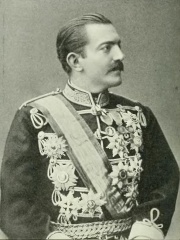
Milan I of Serbia
POLITICIAN
1854 - 1901
HPI: 69.91
Rank: 47
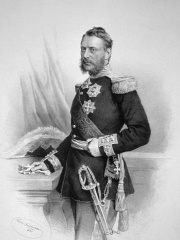
Alexandru Ioan Cuza
POLITICIAN
1820 - 1873
HPI: 69.88
Rank: 48
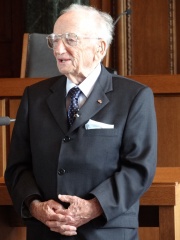
Ben Ferencz
POLITICIAN
1920 - 2023
HPI: 69.71
Rank: 49
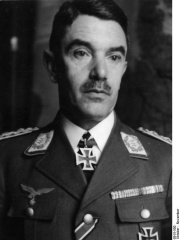
Alexander Löhr
MILITARY PERSONNEL
1885 - 1947
HPI: 69.66
Rank: 50
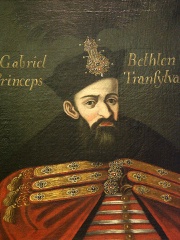
Gabriel Bethlen
POLITICIAN
1580 - 1629
HPI: 69.51
Rank: 51

Mircea II of Wallachia
POLITICIAN
1422 - 1447
HPI: 69.33
Rank: 52
Regalianus
POLITICIAN
250 - 260
HPI: 69.20
Rank: 53
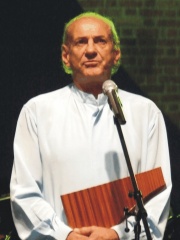
Gheorghe Zamfir
MUSICIAN
1941 - Present
HPI: 69.05
Rank: 54

George Emil Palade
PHYSICIAN
1912 - 2008
HPI: 68.99
Rank: 55

Corneliu Zelea Codreanu
POLITICIAN
1899 - 1938
HPI: 68.80
Rank: 56
Henri Coandă
INVENTOR
1886 - 1972
HPI: 68.53
Rank: 57
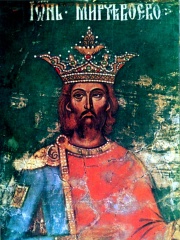
Mircea I of Wallachia
POLITICIAN
1355 - 1418
HPI: 68.46
Rank: 58
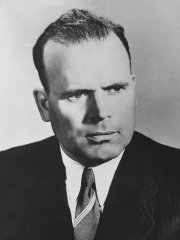
Chivu Stoica
POLITICIAN
1908 - 1975
HPI: 68.44
Rank: 59
Among Politicians In Romania
Among politicians born in Romania, Regalianus ranks 28. Before him are Traian Băsescu (1951), Milan I of Serbia (1854), Alexandru Ioan Cuza (1820), Ben Ferencz (1920), Gabriel Bethlen (1580), and Mircea II of Wallachia (1422). After him are Corneliu Zelea Codreanu (1899), Mircea I of Wallachia (1355), Chivu Stoica (1908), Ana Pauker (1893), Sigismund Báthory (1572), and György Dózsa (1470).

Traian Băsescu
1951 - Present
HPI: 70.60
Rank: 22
Milan I of Serbia
1854 - 1901
HPI: 69.91
Rank: 23
Alexandru Ioan Cuza
1820 - 1873
HPI: 69.88
Rank: 24
Ben Ferencz
1920 - 2023
HPI: 69.71
Rank: 25
Gabriel Bethlen
1580 - 1629
HPI: 69.51
Rank: 26
Mircea II of Wallachia
1422 - 1447
HPI: 69.33
Rank: 27
Regalianus
250 - 260
HPI: 69.20
Rank: 28
Corneliu Zelea Codreanu
1899 - 1938
HPI: 68.80
Rank: 29
Mircea I of Wallachia
1355 - 1418
HPI: 68.46
Rank: 30
Chivu Stoica
1908 - 1975
HPI: 68.44
Rank: 31
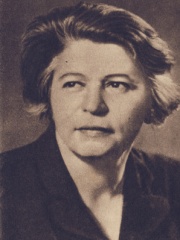
Ana Pauker
1893 - 1960
HPI: 68.21
Rank: 32
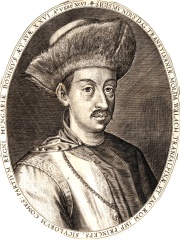
Sigismund Báthory
1572 - 1613
HPI: 67.97
Rank: 33
György Dózsa
1470 - 1514
HPI: 67.84
Rank: 34