Astronaut
Michael S. Hopkins
1968 - today
EN.WIKIPEDIA PAGE VIEWS (PV)
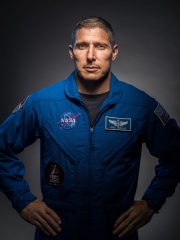

 Michael S. Hopkins
His biography is available in 27 different languages on Wikipedia (up from 26 in 2024). Michael S. Hopkins is the 521st most popular astronaut (up from 523rd in 2024), the 17,491st most popular biography from United States (down from 16,819th in 2019) and the 291st most popular American Astronaut.
Memorability Metrics
Page views of Michael S. Hopkins by language
Among Astronauts
Among astronauts, Michael S. Hopkins ranks 521 out of 556. Before him are Deng Qingming, Mark T. Vande Hei, Frederick W. Sturckow, Marcus Wandt, Christopher Cassidy, and Lee Morin. After him are Sergey Ryazansky, Hayley Arceneaux, Charles Camarda, Paul W. Richards, Randolph Bresnik, and Charles D. Gemar.
Most Popular Astronauts in Wikipedia
Go to all Rankings

Deng Qingming
1966 - Present
HPI: 42.89
Rank: 515
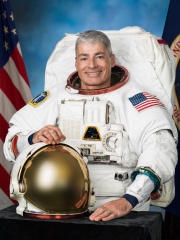
Mark T. Vande Hei
1966 - Present
HPI: 42.84
Rank: 516
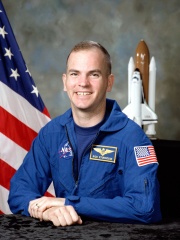
Frederick W. Sturckow
1961 - Present
HPI: 42.78
Rank: 517

Marcus Wandt
1980 - Present
HPI: 42.69
Rank: 518
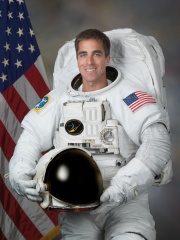
Christopher Cassidy
1970 - Present
HPI: 42.56
Rank: 519
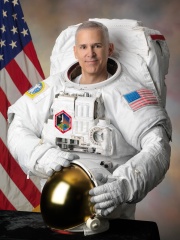
Lee Morin
1952 - Present
HPI: 42.47
Rank: 520
Michael S. Hopkins
1968 - Present
HPI: 42.43
Rank: 521
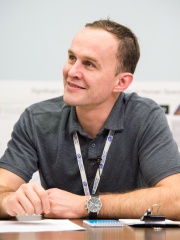
Sergey Ryazansky
1974 - Present
HPI: 42.27
Rank: 522

Hayley Arceneaux
1991 - Present
HPI: 42.07
Rank: 523
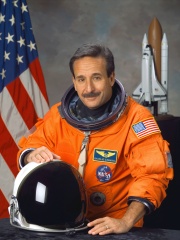
Charles Camarda
1952 - Present
HPI: 42.06
Rank: 524
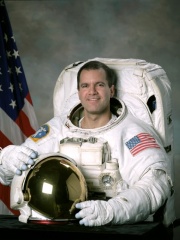
Paul W. Richards
1964 - Present
HPI: 42.05
Rank: 525
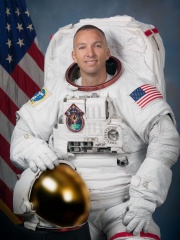
Randolph Bresnik
1967 - Present
HPI: 42.04
Rank: 526
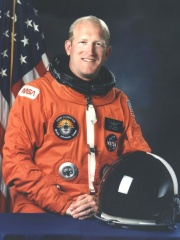
Charles D. Gemar
1955 - Present
HPI: 42.01
Rank: 527

Contemporaries
Among people born in 1968, Michael S. Hopkins ranks 1,014. Before him are Ryosuke Okuno, Trevor Dunn, Masanori Suzuki, Mitsuaki Kojima, Mark Recchi, and Hans-Peter Steinacher. After him are Zhang Di, Dmitry Shevchenko, Bettany Hughes, Sean Gullette, Oleg Kutscherenko, and Luljeta Lleshanaku.
Others Born in 1968
Go to all Rankings
Ryosuke Okuno
SOCCER PLAYER
1968 - Present
HPI: 42.52
Rank: 1,008

Trevor Dunn
COMPOSER
1968 - Present
HPI: 42.51
Rank: 1,009

Masanori Suzuki
SOCCER PLAYER
1968 - Present
HPI: 42.50
Rank: 1,010

Mitsuaki Kojima
SOCCER PLAYER
1968 - Present
HPI: 42.46
Rank: 1,011

Mark Recchi
HOCKEY PLAYER
1968 - Present
HPI: 42.46
Rank: 1,012
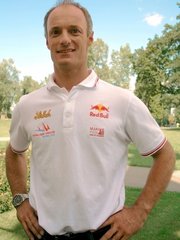
Hans-Peter Steinacher
ATHLETE
1968 - Present
HPI: 42.46
Rank: 1,013
Michael S. Hopkins
ASTRONAUT
1968 - Present
HPI: 42.43
Rank: 1,014

Zhang Di
MARTIAL ARTS
1968 - Present
HPI: 42.43
Rank: 1,015

Dmitry Shevchenko
ATHLETE
1968 - Present
HPI: 42.43
Rank: 1,016
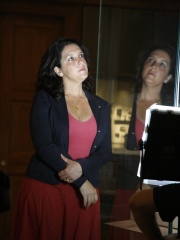
Bettany Hughes
HISTORIAN
1968 - Present
HPI: 42.42
Rank: 1,017
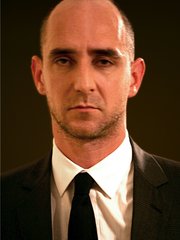
Sean Gullette
FILM DIRECTOR
1968 - Present
HPI: 42.42
Rank: 1,018

Oleg Kutscherenko
WRESTLER
1968 - Present
HPI: 42.41
Rank: 1,019

Luljeta Lleshanaku
WRITER
1968 - Present
HPI: 42.40
Rank: 1,020
In United States
Among people born in United States, Michael S. Hopkins ranks 17,498 out of NaN. Before him are Nic Claxton (1999), Danielle Rose Russell (1999), Earl Blumenauer (1948), Cree Summer (1969), Rajeev Ram (1984), and Natália Kelly (1994). After him are Austin Mahone (1996), Matt Chamberlain (1967), Tony Moore (1978), Elizabeth Armstrong (1983), Mitch Harris (1969), and Fred Hechinger (1999).
Others born in United States
Go to all Rankings
Nic Claxton
BASKETBALL PLAYER
1999 - Present
HPI: 42.44
Rank: 17,492

Danielle Rose Russell
ACTOR
1999 - Present
HPI: 42.44
Rank: 17,493
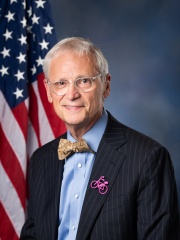
Earl Blumenauer
POLITICIAN
1948 - Present
HPI: 42.44
Rank: 17,494

Cree Summer
ACTOR
1969 - Present
HPI: 42.43
Rank: 17,495
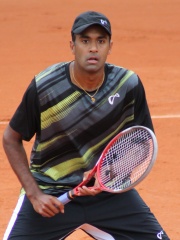
Rajeev Ram
TENNIS PLAYER
1984 - Present
HPI: 42.43
Rank: 17,496

Natália Kelly
SINGER
1994 - Present
HPI: 42.43
Rank: 17,497
Michael S. Hopkins
ASTRONAUT
1968 - Present
HPI: 42.43
Rank: 17,498

Austin Mahone
MUSICIAN
1996 - Present
HPI: 42.43
Rank: 17,499

Matt Chamberlain
MUSICIAN
1967 - Present
HPI: 42.43
Rank: 17,500

Tony Moore
COMIC ARTIST
1978 - Present
HPI: 42.43
Rank: 17,501

Elizabeth Armstrong
ATHLETE
1983 - Present
HPI: 42.43
Rank: 17,502
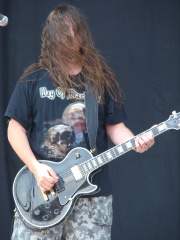
Mitch Harris
MUSICIAN
1969 - Present
HPI: 42.42
Rank: 17,503

Fred Hechinger
ACTOR
1999 - Present
HPI: 42.42
Rank: 17,504
Among Astronauts In United States
Among astronauts born in United States, Michael S. Hopkins ranks 291. Before him are Thomas David Jones (1955), Stephen Frick (1964), Mark T. Vande Hei (1966), Frederick W. Sturckow (1961), Christopher Cassidy (1970), and Lee Morin (1952). After him are Hayley Arceneaux (1991), Charles Camarda (1952), Paul W. Richards (1964), Randolph Bresnik (1967), Charles D. Gemar (1955), and John D. Olivas (1966).
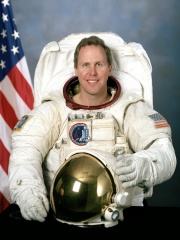
Thomas David Jones
1955 - Present
HPI: 42.97
Rank: 285
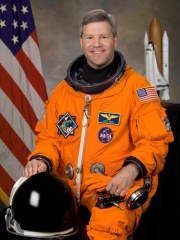
Stephen Frick
1964 - Present
HPI: 42.96
Rank: 286
Mark T. Vande Hei
1966 - Present
HPI: 42.84
Rank: 287
Frederick W. Sturckow
1961 - Present
HPI: 42.78
Rank: 288
Christopher Cassidy
1970 - Present
HPI: 42.56
Rank: 289
Lee Morin
1952 - Present
HPI: 42.47
Rank: 290
Michael S. Hopkins
1968 - Present
HPI: 42.43
Rank: 291
Hayley Arceneaux
1991 - Present
HPI: 42.07
Rank: 292
Charles Camarda
1952 - Present
HPI: 42.06
Rank: 293
Paul W. Richards
1964 - Present
HPI: 42.05
Rank: 294
Randolph Bresnik
1967 - Present
HPI: 42.04
Rank: 295
Charles D. Gemar
1955 - Present
HPI: 42.01
Rank: 296
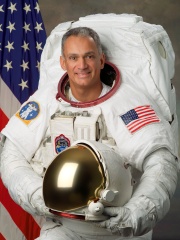
John D. Olivas
1966 - Present
HPI: 41.98
Rank: 297