Político
Apama
400 BC - presente

 Apama
Apama
Apama I fue la primera esposa de Seleuco I, fundador del Imperio seléucida. Era hija de un noble persa de origen sogdiano, Espitamenes, que luchó contra Alejandro Magno. Leer más en Wikipedia
Her biography is available in 26 different languages on Wikipedia (up from 24 in 2024). Apama is the 5,803rd most popular político (up from 6,247th in 2024), the 177th most popular biography from Iran (up from 186th in 2019) and the 98th most popular Iranian Político.
Memorability Metrics
Page views of Apama by language
Among Políticos
Among políticos, Apama ranks 5,803 out of 19,576. Before her are Alice Weidel, Jan Smuts, Hakor, Matthias Gallas, Sālote Tupou III, and Mahmoud al-Zahar. After her are Robert II, Duke of Burgundy, Yaropolk II of Kiev, Artur da Costa e Silva, Dorothea of Denmark, Duchess of Prussia, Casimir II the Just, and Huang Chao.
Most Popular Políticos in Wikipedia
Go to all Rankings

Alice Weidel
1979 - Present
HPI: 65.53
Rank: 5,799
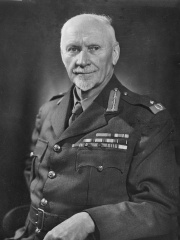
Jan Smuts
1870 - 1950
HPI: 65.53
Rank: 5,800
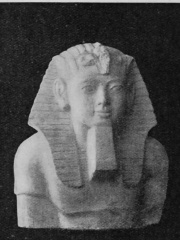
Hakor
390 BC - 380 BC
HPI: 65.53
Rank: 5,801

Matthias Gallas
1584 - 1647
HPI: 65.53
Rank: 5,802
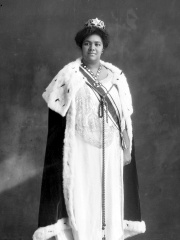
Sālote Tupou III
1900 - 1965
HPI: 65.52
Rank: 5,803
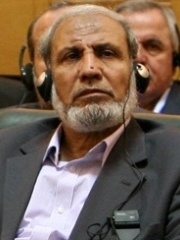
Mahmoud al-Zahar
1945 - Present
HPI: 65.52
Rank: 5,804
Apama
400 BC - Present
HPI: 65.52
Rank: 5,805
Robert II, Duke of Burgundy
1248 - 1306
HPI: 65.52
Rank: 5,806
Yaropolk II of Kiev
1082 - 1139
HPI: 65.52
Rank: 5,807
Artur da Costa e Silva
1899 - 1969
HPI: 65.52
Rank: 5,808
Dorothea of Denmark, Duchess of Prussia
1504 - 1547
HPI: 65.51
Rank: 5,809
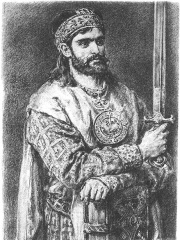
Casimir II the Just
1138 - 1194
HPI: 65.51
Rank: 5,810
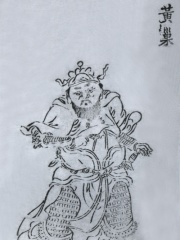
Huang Chao
801 - 884
HPI: 65.51
Rank: 5,811

Contemporaries
Among people born in 400 BC, Apama ranks 30. Before her are Pausanias of Orestis, Lais of Corinth, Polemon, Titus Manlius Imperiosus Torquatus, Harpalus, and Crates of Athens. After her are Crantor, Arete of Cyrene, Attalus, Dinocrates, Zoilus, and Gan De.
Others Born in 400 BC
Go to all Rankings
Pausanias of Orestis
POLITICIAN
400 BC - 336 BC
HPI: 65.89
Rank: 24

Lais of Corinth
POLITICIAN
400 BC - 360 BC
HPI: 65.75
Rank: 25
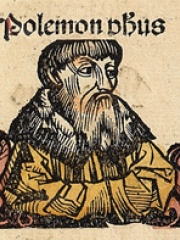
Polemon
PHILOSOPHER
400 BC - 270 BC
HPI: 65.65
Rank: 26
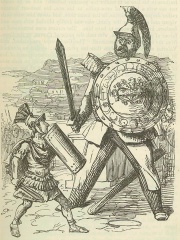
Titus Manlius Imperiosus Torquatus
POLITICIAN
400 BC - 301 BC
HPI: 65.60
Rank: 27

Harpalus
POLITICIAN
400 BC - 323 BC
HPI: 65.55
Rank: 28
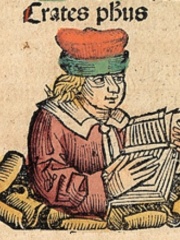
Crates of Athens
PHILOSOPHER
400 BC - 268 BC
HPI: 65.54
Rank: 29
Apama
POLITICIAN
400 BC - Present
HPI: 65.52
Rank: 30

Crantor
PHILOSOPHER
400 BC - 276 BC
HPI: 65.35
Rank: 31

Arete of Cyrene
PHILOSOPHER
400 BC - 340 BC
HPI: 65.25
Rank: 32

Attalus
POLITICIAN
400 BC - 336 BC
HPI: 65.15
Rank: 33

Dinocrates
ARCHITECT
400 BC - 360 BC
HPI: 64.98
Rank: 34
Zoilus
PHILOSOPHER
400 BC - 320 BC
HPI: 64.73
Rank: 35

Gan De
ASTRONOMER
400 BC - 400 BC
HPI: 64.54
Rank: 36
In Iran
Among people born in Iran, Apama ranks 177 out of 631. Before her are Abbas Mirza (1789), Sultan Husayn (1668), 'Adud al-Dawla (936), Sharafkhan Bidlisi (1543), Mir-Hossein Mousavi (1942), and Mohammad Bagheri (1960). After her are Harpagus (-700), Sadegh Hedayat (1903), Sharaf al-Dīn al-Ṭūsī (1135), Shaykh Tusi (995), Shapour Bakhtiar (1914), and Mehdi Bazargan (1907).
Others born in Iran
Go to all Rankings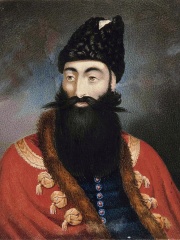
Abbas Mirza
POLITICIAN
1789 - 1833
HPI: 65.86
Rank: 171
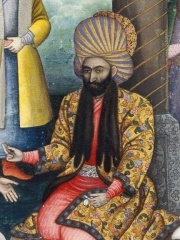
Sultan Husayn
POLITICIAN
1668 - 1726
HPI: 65.79
Rank: 172
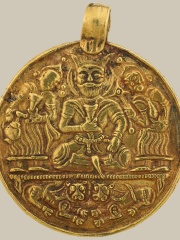
'Adud al-Dawla
POLITICIAN
936 - 983
HPI: 65.72
Rank: 173
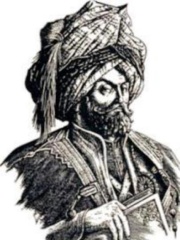
Sharafkhan Bidlisi
WRITER
1543 - 1603
HPI: 65.66
Rank: 174

Mir-Hossein Mousavi
POLITICIAN
1942 - Present
HPI: 65.62
Rank: 175

Mohammad Bagheri
MILITARY PERSONNEL
1960 - 2025
HPI: 65.53
Rank: 176
Apama
POLITICIAN
400 BC - Present
HPI: 65.52
Rank: 177
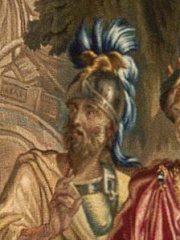
Harpagus
MILITARY PERSONNEL
700 BC - 600 BC
HPI: 65.50
Rank: 178
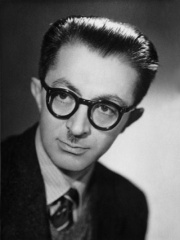
Sadegh Hedayat
WRITER
1903 - 1951
HPI: 65.47
Rank: 179

Sharaf al-Dīn al-Ṭūsī
MATHEMATICIAN
1135 - 1213
HPI: 65.24
Rank: 180

Shaykh Tusi
RELIGIOUS FIGURE
995 - 1067
HPI: 65.23
Rank: 181
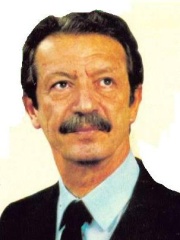
Shapour Bakhtiar
POLITICIAN
1914 - 1991
HPI: 65.16
Rank: 182
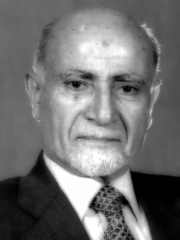
Mehdi Bazargan
POLITICIAN
1907 - 1995
HPI: 65.13
Rank: 183
Among Políticos In Iran
Among políticos born in Iran, Apama ranks 98. Before her are Karim Khan Zand (1705), Tiridates I of Armenia (null), Abbas Mirza (1789), Sultan Husayn (1668), 'Adud al-Dawla (936), and Mir-Hossein Mousavi (1942). After her are Shapour Bakhtiar (1914), Mehdi Bazargan (1907), Hussein-Ali Montazeri (1922), Timur Shah Durrani (1748), Arsames (-550), and Abdullah Mirza (1433).
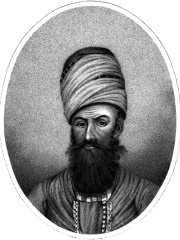
Karim Khan Zand
1705 - 1779
HPI: 66.60
Rank: 92
Tiridates I of Armenia
HPI: 66.15
Rank: 93
Abbas Mirza
1789 - 1833
HPI: 65.86
Rank: 94
Sultan Husayn
1668 - 1726
HPI: 65.79
Rank: 95
'Adud al-Dawla
936 - 983
HPI: 65.72
Rank: 96
Mir-Hossein Mousavi
1942 - Present
HPI: 65.62
Rank: 97
Apama
400 BC - Present
HPI: 65.52
Rank: 98
Shapour Bakhtiar
1914 - 1991
HPI: 65.16
Rank: 99
Mehdi Bazargan
1907 - 1995
HPI: 65.13
Rank: 100
Hussein-Ali Montazeri
1922 - 2009
HPI: 65.11
Rank: 101
Timur Shah Durrani
1748 - 1793
HPI: 65.02
Rank: 102
Arsames
550 BC - 600 BC
HPI: 64.82
Rank: 103
Abdullah Mirza
1433 - 1451
HPI: 64.55
Rank: 104